
Lymphatic Massage After Liposuction: When, How Often, and Why
In short
Gentle lymphatic drainage may help clear swelling after liposuction, but evidence comes from small studies, and your surgeon sets when to start and how many sessions. One-sided calf pain, fever or spreading redness need examination first.
What does lymphatic massage actually do after liposuction?

Manual lymphatic drainage uses very light pressure and slow strokes to guide excess fluid from under the skin toward lymph nodes, where the body can absorb it more easily. Its goal is less swelling and heaviness. It does not "break up fat," and it does not replace your compression garment or your surgeon's instructions.
This article is educational and does not replace an in-person examination. Whether massage is allowed for you, and from which day, is a decision for the surgeon who performed your procedure.
How it differs from a regular massage
Deep tissue or Swedish massage works on muscle with firm pressure. Lymphatic massage works on the skin and the tissue just beneath it, with pressure so light it usually only stretches the skin slightly. Pushing hard to "force the swelling out" of freshly injured tissue is more likely to cause bruising and pain than benefit.
What the evidence says
A small clinical study in the Indian Journal of Plastic Surgery (2014) followed 18 women in the late postoperative period after liposuction or lipoabdominoplasty. Twelve sessions of therapeutic ultrasound followed by manual lymphatic drainage reduced pain, swelling and tissue fibrosis. That is encouraging, but the sample is small and the design cannot separate the effect of drainage from the effect of ultrasound. A fair reading is that gentle drainage is low-risk and plausibly helpful, not that its benefit is proven.
Why does swelling and fluid build up after liposuction?
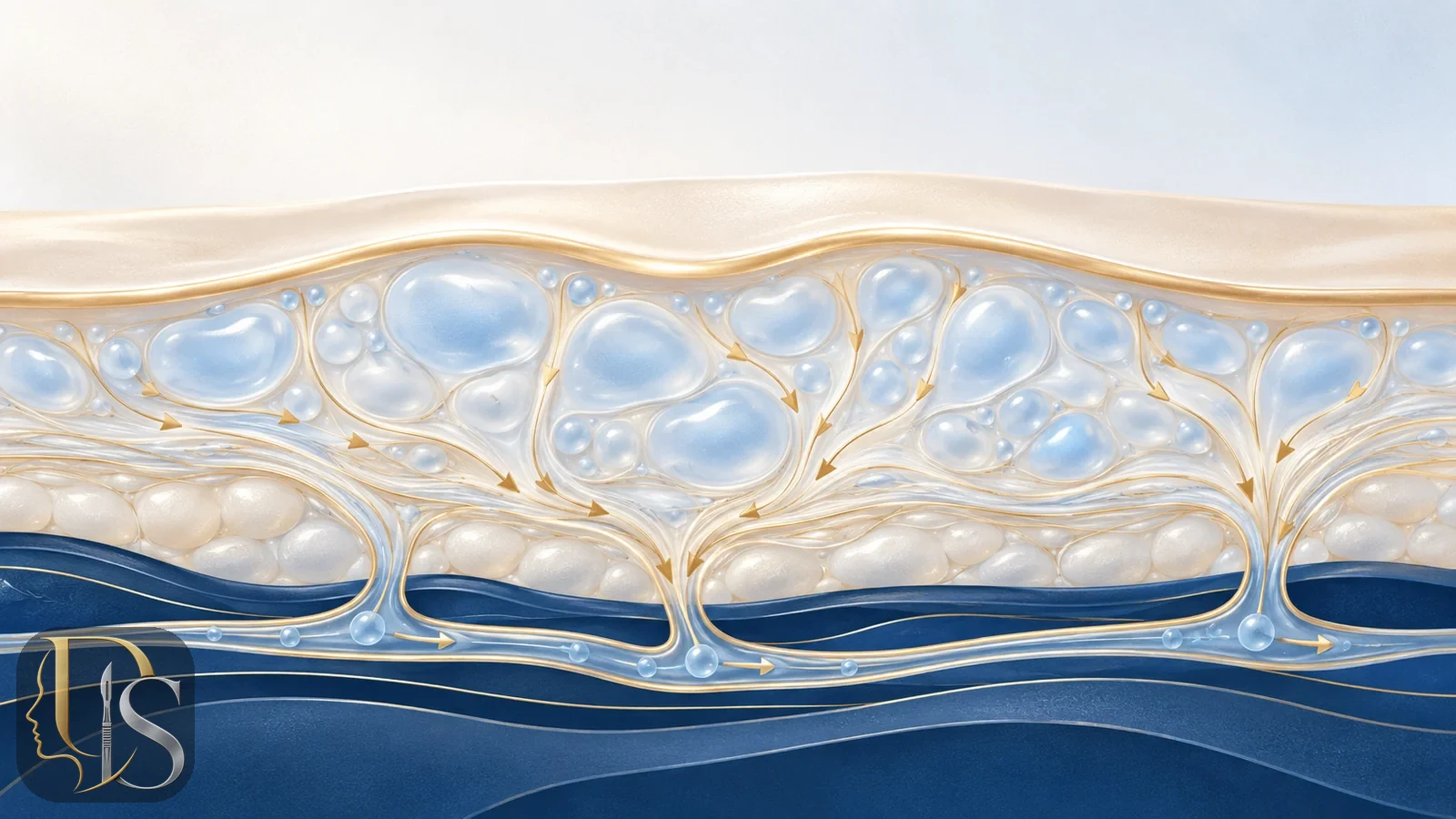
Liposuction removes fat through narrow tracks under the skin, and the surrounding tissue is bruised in the process. The body responds by sending fluid and inflammatory cells to the area. According to StatPearls, bruising usually settles within 1 to 2 weeks, edema can last several weeks, and the final contour only appears once swelling has fully subsided.
Where the fluid comes from
Liposuction typically uses a wetting solution of saline, local anesthetic and a vessel-constricting drug. Some of it stays in the tissue until it is absorbed. In addition, small blood and lymphatic channels along the cannula path are disturbed, so drainage is slower than usual until they heal. Together these cause swelling, heaviness and a "waterlogged" feeling.
How long swelling is normal
Cleveland Clinic says it may take three to six months for swelling to go away completely, and Mayo Clinic describes weeks to months before final results are visible. Swelling that is still present at one month is therefore not, by itself, a sign that something went wrong.
When can lymphatic massage start?

There is no single answer, because protocols differ between surgeons. Some allow very gentle massage within the first days; others wait until week two, once bruising has faded and any drain is out. The one rule that applies everywhere is that massage starts with your surgeon's permission, not on the advice of a device seller or a video.
A typical outline of recovery stages
The table shows the common pattern in practice. It is not a medical prescription, and your surgeon may sequence things differently.
| Stage | Typical tissue state | Common approach to massage |
|---|---|---|
| First days | Most swelling and bruising; drain or stitches may be present | Only if the surgeon instructs; walking and the garment come first |
| Weeks 1 to 2 | Bruising starting to fade | Very light massage if the surgeon allows |
| Weeks 2 to 6 | Residual swelling, sometimes firmness | More regular drainage, often with a trained physiotherapist |
| After month 3 | Little swelling, shape stabilizing | Only if swelling or firmness is still clearly present |
Conditions to check before massage
If you still have a drain, an open wound or discharge, or the area is warm and red, massage may not be appropriate. Likewise, if swelling suddenly becomes one-sided and firm, the cause (for example a seroma or infection) should be assessed first.
How many sessions are needed?

No standard number has been established by controlled trials. The 18-patient study above used 12 sessions, but that was the protocol of that study and should not be read as a general rule. In practice, the number depends on how many areas were treated, how much fat was removed and how much swelling remains.
What to watch instead of counting sessions
- Reasonable to continue: heaviness and swelling are a little lower from one session to the next and the tissue feels softer.
- Pause and ask: pain, fresh bruising or warmth appears after a session.
- Stop and call the surgeon: fever, spreading redness, discharge, or one-sided calf swelling with pain.
At home or with a therapist
A therapist trained in lymphatic drainage is usually the better option because they know the direction and pressure. If your surgeon approves self-massage, one in-person lesson is safer than copying a video.
How is lymphatic massage different from massaging firmness and fibrosis?
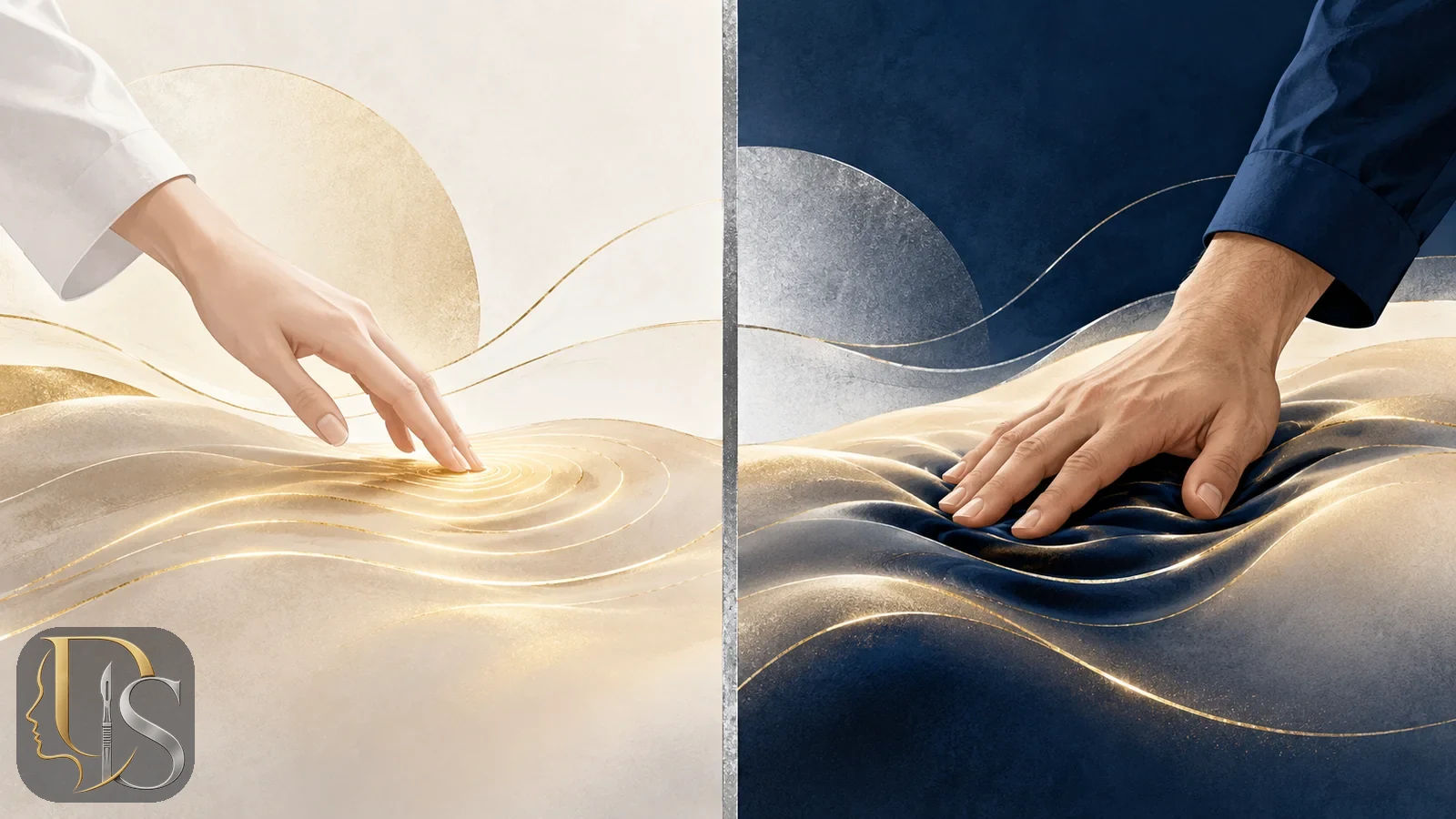
They are different jobs. Lymphatic massage moves fluid. Firmness and fibrosis (scar-like tissue under the skin) appear after several weeks and are managed separately, under the direction of the surgeon or a physiotherapist. Deep massage too early can irritate inflamed tissue instead of helping it.
If firmness is worrying you, our article on firmness and fibrosis after liposuction covers warning signs and timelines.
Sometimes combined with physiotherapy
In the 18-patient study, drainage was used together with therapeutic ultrasound. In practice, drainage is often one part of a physiotherapy plan rather than a stand-alone step, although large controlled trials are lacking.
Massage does not replace the garment or walking

Lymphatic massage is one tool for managing swelling, not the only one. Both Mayo Clinic and Cleveland Clinic describe wearing a compression garment for several weeks to reduce swelling and help the skin adapt to its new shape, and StatPearls stresses early walking to lower clot risk.
Order of priority
- First: your surgeon's instructions on the garment, drains and activity.
- Second: light walking and regular movement.
- Third: gentle lymphatic massage, with permission and at the right time.
A common mistake
Some people remove the garment "so the massage works better," while others wear a garment and skip everything else. Neither is right; the two complement each other, and the surgeon sets how many hours and how many weeks the garment is worn.
Warning signs to take seriously before any massage

Pain, swelling or warmth in one calf, shortness of breath, fever or spreading redness are warning signs that need prompt assessment before any massage. StatPearls describes deep vein thrombosis as calf pain with leg swelling and pulmonary embolism as breathlessness with a fast heart rate. These are rare, but serious.
Seroma and massage
A seroma, a pocket of fluid under the skin, is a recognized complication of liposuction and, per Mayo Clinic, may need to be drained with a needle. Do not assume a distinct fluid pocket will resolve with hand massage; the surgeon should examine it.
When to call
If you are unsure whether swelling is normal, calling your surgeon or surgical team is better than waiting. A short phone call is usually faster than a massage session you later have to stop.
Frequently Asked Questions
How many days after liposuction can I start lymphatic massage?
Your surgeon sets the exact timing. Some protocols allow very gentle massage in the first days and others wait until week two. If you still have a drain, an open wound or any discharge, starting massage without your surgeon's approval is not advisable.
Is lymphatic massage after liposuction really necessary?
It is not mandatory and not every patient has it. Small studies show benefit for swelling and firmness, but the evidence is not strong or broad. The garment, walking and time remain the core of swelling control, and massage is an add-on.
Can massage cause irregularities or fibrosis?
Gentle, correctly applied massage does not create irregularities, but heavy early pressure on inflamed tissue can increase pain and bruising. Irregularities come mostly from technique, uneven fat removal and skin elasticity; massage neither causes nor fully erases them.
Should I massage at home or see a therapist?
If your surgeon approves, one in-person lesson from a trained therapist is safer than copying a video. Pressure must be very light, and if pain, warmth or swelling increase, stop and let your surgeon know.
Do pressotherapy or massage devices replace manual massage?
There is no strong evidence that any device is equivalent to manual drainage. Any device, especially one with high pressure, should be cleared with your surgeon first; using one over an inflamed area or a leg with a possible clot can be dangerous.
When should you consult a doctor
Call your surgeon if swelling is not improving after several weeks, you notice new firmness, or you do not know when massage, a device or physiotherapy is allowed. If you are considering liposuction, the liposuction page and the body contouring page explain the consultation path, and up-to-date costs are on the services and pricing list. This article does not replace an in-person examination.
Sources
This article is educational and does not replace an in-person examination or consultation. Discuss any surgical decision with your own physician.
About the author

General Surgeon
Medical Council No.: 74530 · Verify in the Medical Council register
Specialist in general surgery focused on rhinoplasty, body contouring, abdominoplasty, VASER liposuction and aesthetic breast surgery.
- Specialist in general surgery
- Member of the Iranian Medical Council
- Specialist in body contouring, VASER liposuction and aesthetic breast surgery
Medically reviewed by a physician
See the full profileQuestions about this procedure?
A consultation covers your own anatomy, what is realistically achievable, and what it involves.
VASER LiposuctionComments
No comments yet. Be the first to write one.
Related articles
VASER vs Traditional Liposuction: Does Ultrasound Help?
VASER softens fat with ultrasound before suction, while traditional liposuction relies only on cannula movement. Published reviews do not show VASER to be better across the board: its documented edge is limited to gynecomastia and some high-volume cases, and results are otherwise similar.
Read moreBumps and Waviness After Liposuction: Causes and Correction
Skin irregularity is a common liposuction complication, caused by uneven fat removal, low skin elasticity or scarring. Some is temporary swelling that fades over months; structural irregularity can be lasting and may need surgical correction.
Read moreFirmness and Fibrosis After Liposuction: Normal or a Problem?
Firmness in the first weeks and months is usually normal swelling and healing and often softens. Fibrosis is persistent or lumpy firmness; pain, warmth, fever or a growing one-sided lump should be examined, not waited out.
Read more