
VASER vs Traditional Liposuction: What's the Difference?
In short
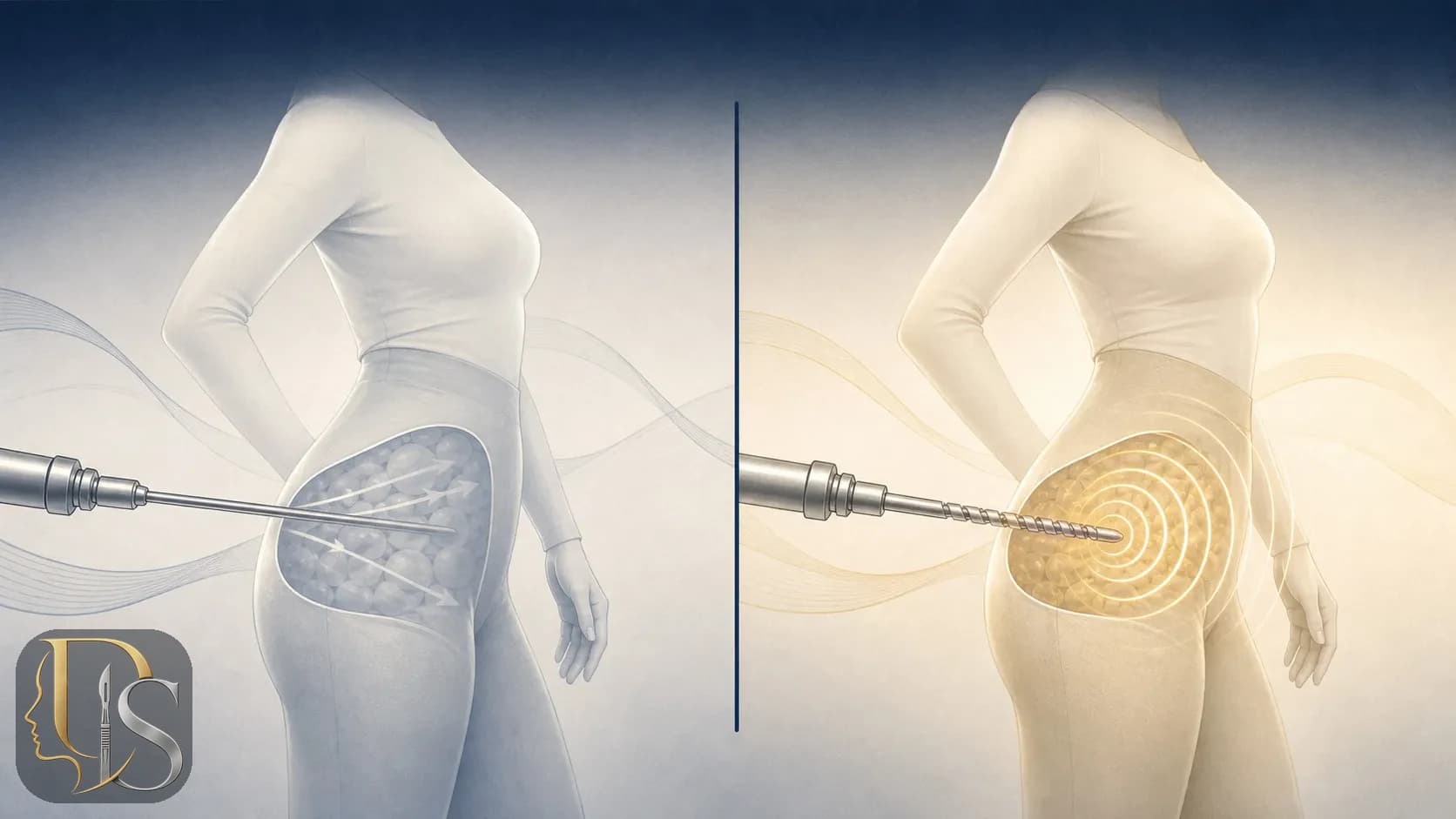
VASER liposuction uses ultrasound to break down fat before suction; traditional liposuction relies on mechanical suction alone. Its edge is less bleeding in high-volume cases and more precision in delicate areas — not a complication-free technique.
What's the difference between VASER and traditional liposuction?
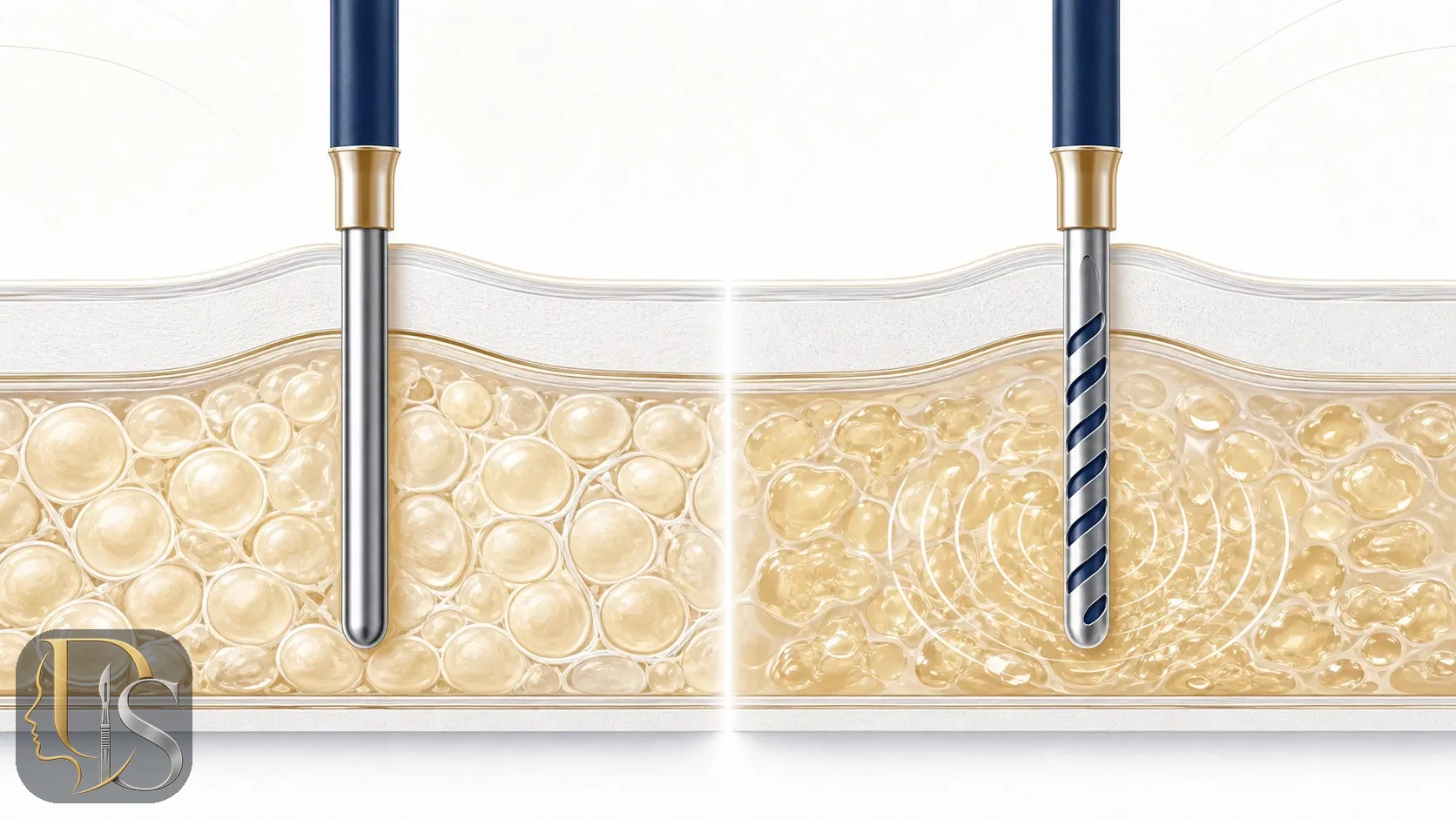
Both techniques remove fat through a thin metal cannula. The real difference is what happens before suction. In traditional (suction-assisted) liposuction, the surgeon breaks up fat purely by moving the cannula back and forth. In VASER liposuction, the cannula also emits ultrasound energy that liquefies fat cells before suction, so less mechanical force is needed to remove the same amount of fat.
According to an NCBI/StatPearls clinical review, current evidence does not strongly support replacing traditional liposuction with VASER (or laser-assisted liposuction) across the board. VASER's documented advantages are specific: it outperforms traditional technique in treating gynecomastia, and it reduces blood loss in high-volume lipoaspirates. That makes it a better tool for particular cases, not a universally superior technique.
What does the VASER device actually do to fat?

VASER stands for Vibration Amplification of Sound Energy at Resonance. Cleveland Clinic classifies it as a type of ultrasound-assisted liposuction (UAL): a grooved stainless-steel cannula delivers ultrasound waves directly into fat tissue, breaking it down before a separate suction step removes it.
Why this mechanism affects bleeding
Before the cannula is inserted, a tumescent wetting solution — saline, epinephrine and a local anesthetic — is infiltrated into the area to constrict blood vessels. Both traditional and VASER liposuction use this step. What VASER adds is pre-liquefying fat cells with ultrasound; because the tissue is already softened before suction, the surgeon needs fewer aggressive back-and-forth passes, which is what reduces blood loss in larger-volume cases.
Comparing VASER, traditional and laser liposuction
| Feature | VASER (UAL) | Traditional (SAL) | Laser (LAL) |
|---|---|---|---|
| Fat-breakdown mechanism | Ultrasound, before suction | Mechanical cannula movement only | Laser energy, before suction |
| Blood loss in high volume | Lower | Reference baseline | Lower |
| Skin tightening | Often better under the chin | Average | Often better under the chin |
| Best documented use | Gynecomastia, fibrous areas | Large areas of soft fat | Small, superficial areas |
Numbers in this table are drawn from the NCBI/StatPearls review and Cleveland Clinic's liposuction page (see Sources below).
Who is actually a good candidate for liposuction?

By NCBI/StatPearls' clinical criteria, an ideal candidate has had a stable weight for 6 to 12 months before surgery, sits close to their normal body weight, and has skin elastic enough to adapt to the new contour. Liposuction — traditional or VASER — is not a weight-loss method; it removes localized fat that resists diet and exercise, not overall body fat.
Cleveland Clinic adds that being a nonsmoker and having realistic expectations are two further conditions. If the actual goal is correcting loose abdominal skin rather than fat itself, liposuction alone won't do it — it's typically combined with abdominoplasty; see the "Combining with other procedures" section below.
Who shouldn't have VASER liposuction?
Per the NCBI/StatPearls review, three groups need particular caution: patients at elevated clot risk (assessed before surgery with the clinical Caprini score), smokers who haven't quit at least 4 weeks before the procedure, and patients whose psychological screening suggests body dysmorphic disorder (BDD) — studies show up to 15% of people seeking aesthetic surgery meet BDD criteria, and a mental-health evaluation is essential before proceeding in those cases.
Blood-thinning medication, pregnancy, and underlying heart or kidney conditions also require closer evaluation during the consultation — the final decision always follows an in-person exam and a full medical history.
What does week-by-week recovery actually look like?

According to Cleveland Clinic, returning to light desk work is usually possible within a few days; feeling "back to normal" typically takes about two weeks; and resuming strenuous exercise is usually delayed until around six weeks. Swelling fully resolves, and the final shape becomes visible, somewhere between three and six months.
| Timeframe | What typically happens |
|---|---|
| First 2–3 days | Bruising, swelling and mild pain; compression garment worn |
| About 2 weeks | Return to normal daily and desk activities |
| Up to 6 weeks | Resuming exercise and strenuous activity |
| 3–6 months | Swelling fully resolves; final shape visible |
These ranges are averages, not fixed rules — the volume of fat removed, the number of areas treated, and individual healing all shift this table somewhat.
Does VASER liposuction combine with abdominoplasty or other surgery?

Yes, in suitable patients. Cleveland Clinic confirms this is common practice, but also cautions that combining procedures in one anesthesia session shortens total recovery time while raising the overall risk of the operation — the decision has to rest on general health and a careful exam, not just the convenience of one surgical visit.
Dr. Mehdi Salmani Moghaddam's background spans both abdominoplasty and liposuction, which is exactly what this kind of combined evaluation requires: abdominal skin loosened by pregnancy or significant weight loss usually needs two separate things addressed — removing resistant fat (liposuction's job) and tightening loose skin and separated muscle (abdominoplasty's job). Whether to combine or stage them is decided in consultation, after a full exam.
Frequently Asked Questions
Is VASER liposuction a weight-loss method?
No. Per Mayo Clinic, liposuction — traditional or VASER — is not a weight-loss method or a substitute for diet and exercise. It removes resistant localized fat, but weight gained afterward can still be stored in other areas of the body.
Is VASER liposuction complication-free?
No surgery is complication-free. Per Mayo Clinic, common complications include bruising, temporary swelling, numbness and surface contour irregularities. More serious complications like fat embolism or blood clots are rare but real, which is exactly why a pre-operative exam and medical history review matter.
Can liposuction cause death?
The risk is extremely rare but not zero. Per the NCBI/StatPearls review, the most serious potential complication is a deep vein blood clot (DVT), which in rare cases can progress to a pulmonary embolism. That's why clot risk is assessed before surgery using the clinical Caprini score, and why higher-volume fat removal calls for stricter fluid protocols and closer anesthesia monitoring.
How long does VASER liposuction take?
Roughly one to a few hours, depending on the number of areas and the volume of fat involved. Per the practice's liposuction page, it's performed under general anesthesia or local anesthesia, depending on the extent of the area treated.
How long do VASER liposuction results last?
Per Cleveland Clinic, liposuction permanently removes fat cells from the treated area. That said, significant weight gain afterward can still be stored in other parts of the body — keeping weight relatively stable is what makes the result last.
When should you talk to a doctor
If diet and regular exercise haven't shifted a stubborn area of fat, your weight has been stable for at least a few months, and you want a realistic assessment rather than a guaranteed outcome, that's a reasonable time for a consultation. This article is educational and doesn't replace an in-person exam and full medical history — only a surgeon, after examining you, can decide on candidacy and technique.
Sources
This article is educational and does not replace an in-person examination or consultation. Discuss any surgical decision with your own physician.
About the author

General Surgeon
Medical Council No.: 74530
Board-certified general surgeon focused on body contouring, abdominoplasty, VASER liposuction and aesthetic breast surgery.
- Board-certified general surgeon
- Member of the Iranian Medical Council
- Specialist in body contouring, VASER liposuction and aesthetic breast surgery
Medically reviewed by a physician
See the full profileQuestions about this procedure?
A consultation covers your own anatomy, what is realistically achievable, and what it involves.
VASER LiposuctionComments
No comments yet. Be the first to write one.