
Bumps and Waviness After Liposuction: Causes and Correction

In short
Skin irregularity is a common liposuction complication, caused by uneven fat removal, low skin elasticity or scarring. Some is temporary swelling that fades over months; structural irregularity can be lasting and may need surgical correction.
What are contour irregularities after liposuction, and how common are they?
Contour irregularity means the skin over a treated area looks bumpy, hollow or wavy. StatPearls calls contour deformities the most frequent complication of liposuction, and Mayo Clinic says the skin may look bumpy, wavy or withered and that these changes may be permanent.
This article is educational and does not replace an in-person examination. You cannot tell from a photo or by touch whether an irregularity is temporary or lasting; that takes examination and time.
How it differs from cellulite
Post-liposuction irregularity usually has an uneven, localized pattern and comes from where fat was removed unevenly. Cellulite is a diffuse "orange peel" pattern that exists without surgery. When both are present, the picture can be hard to read at first and a surgeon should assess it.
Why some irregularities "get better"
Because part of what you see is simply uneven swelling. StatPearls notes that swelling may last several weeks and that the final contour only appears once it subsides, and Cleveland Clinic gives three to six months for swelling to resolve fully.
How do temporary and lasting irregularities differ?
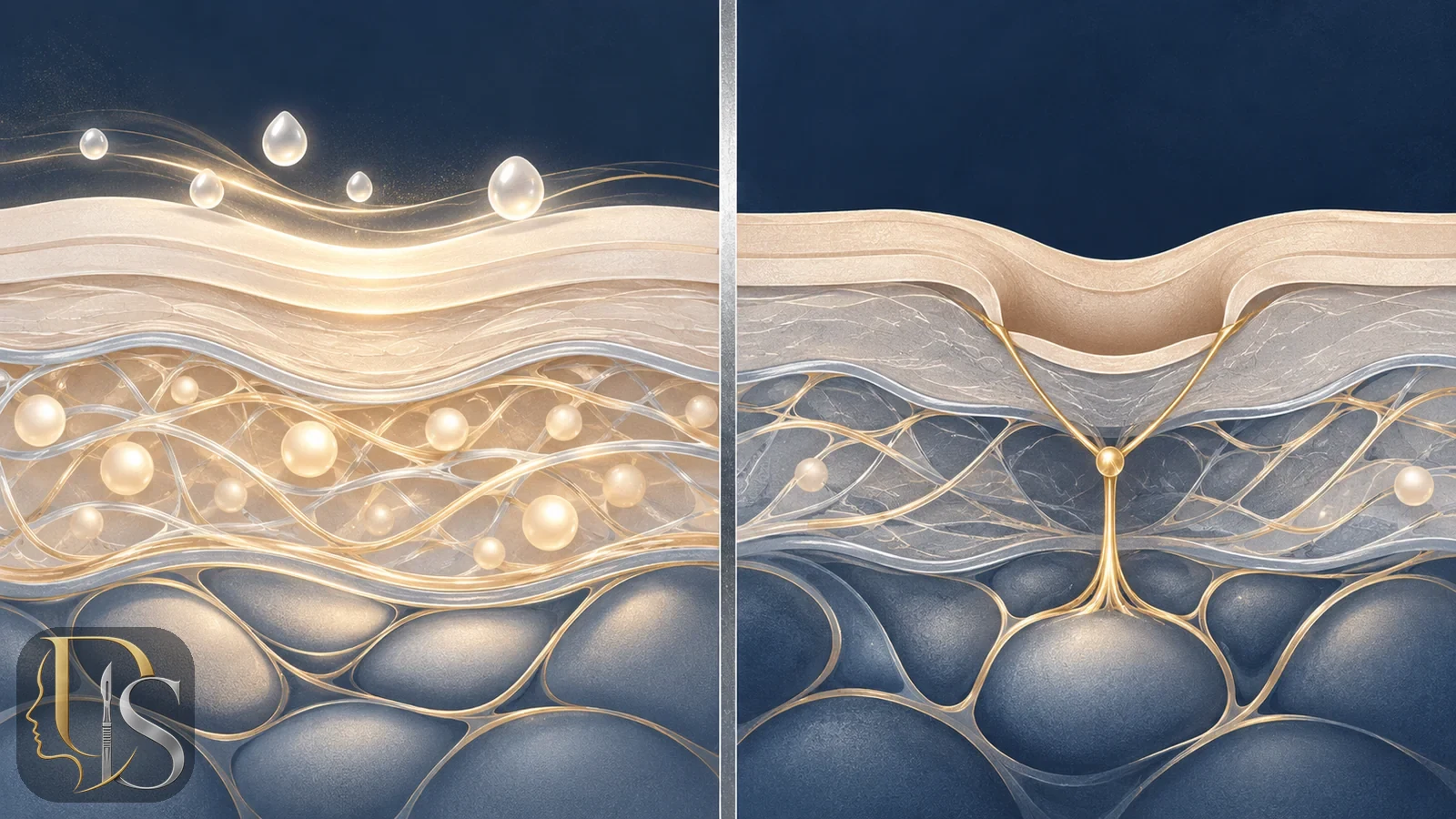
Temporary irregularity is swelling, fluid or healing firmness, and it fades over months. Lasting irregularity comes from a change in the structure under the skin: a depression from removing too much fat, adhesion to deeper tissue, scarring or loose skin. Early on they are hard to tell apart; only time and examination separate them.
| Feature | Temporary (swelling and healing) | Structural (lasting) |
|---|---|---|
| Pattern | Irregular, sometimes shifting | Fixed, with a defined hollow or fold |
| Course over time | Improves week by week | No change after 3 to 6 months |
| When the skin is pinched or stretched | Usually evens out | Hollow or band remains |
| Usual action | Garment, patience, follow-up | Surgeon assessment and correction options |
Signs that point to a structural cause
If a hollow is unchanged after several months, the skin feels stuck to what is underneath, or you feel a firm nodule or band, a structural cause is more likely. See also our article on firmness and fibrosis after liposuction.
What causes irregularities?
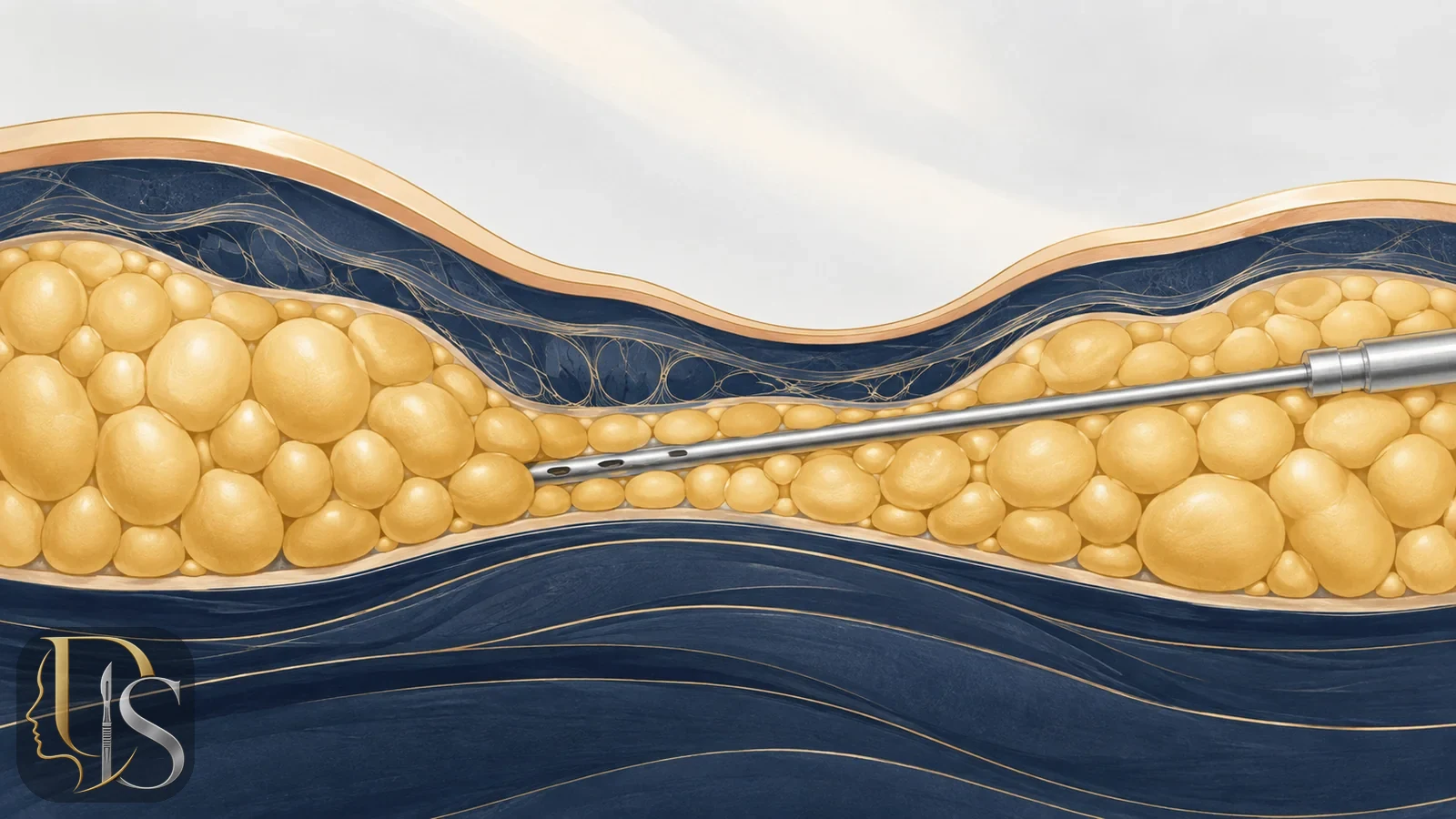
Mayo Clinic names three factors: uneven fat removal, poor skin elasticity and scarring. StatPearls adds that aggressive work in the superficial fat layer may cause irregularities and that avoiding zones of adherence helps prevent them. Part of the story is technique, and part is your own skin and body.
Technique-related factors
- Uneven removal: more taken from one area than its neighbor.
- Overtreating the superficial layer: this layer is thin, dense and vulnerable.
- Cannula ports engaging the skin directly: StatPearls advises avoiding direct contact of cannula ports with the overlying skin.
Patient-related factors
- Skin elasticity: less elastic skin adapts poorly to the new volume.
- Tendency to fibrosis and scarring: a 2024 Aesthetic Surgery Journal study reports depressions and nodules as very frequent findings in patients seeking secondary liposculpture.
- Weight fluctuation after surgery: uneven weight gain changes the shape.
The role of aftercare
Mayo Clinic and Cleveland Clinic both describe wearing a compression garment for several weeks to reduce swelling and help the skin adapt. A garment neither causes nor cures structural irregularity, but it is part of how swelling is controlled.
When can you judge an irregularity?

Early judgment is misleading. According to StatPearls the final contour appears only after swelling has fully subsided, and Cleveland Clinic says three to six months. Assessing irregularity in the first weeks is therefore not reliable, and surgical correction is usually considered after the result has stabilized.
How to compare fairly
- Take photos in the same light and from the same angle, not every day.
- Use the same time of day, since swelling varies through the day.
- At the visit, show the area to your surgeon rather than only describing it.
Anxiety in the early weeks
An uneven look in the first weeks is very common because swelling, bruising and fluid are still present. No decision is needed yet; your surgeon may simply suggest short-term follow-up.
How are irregularities corrected?
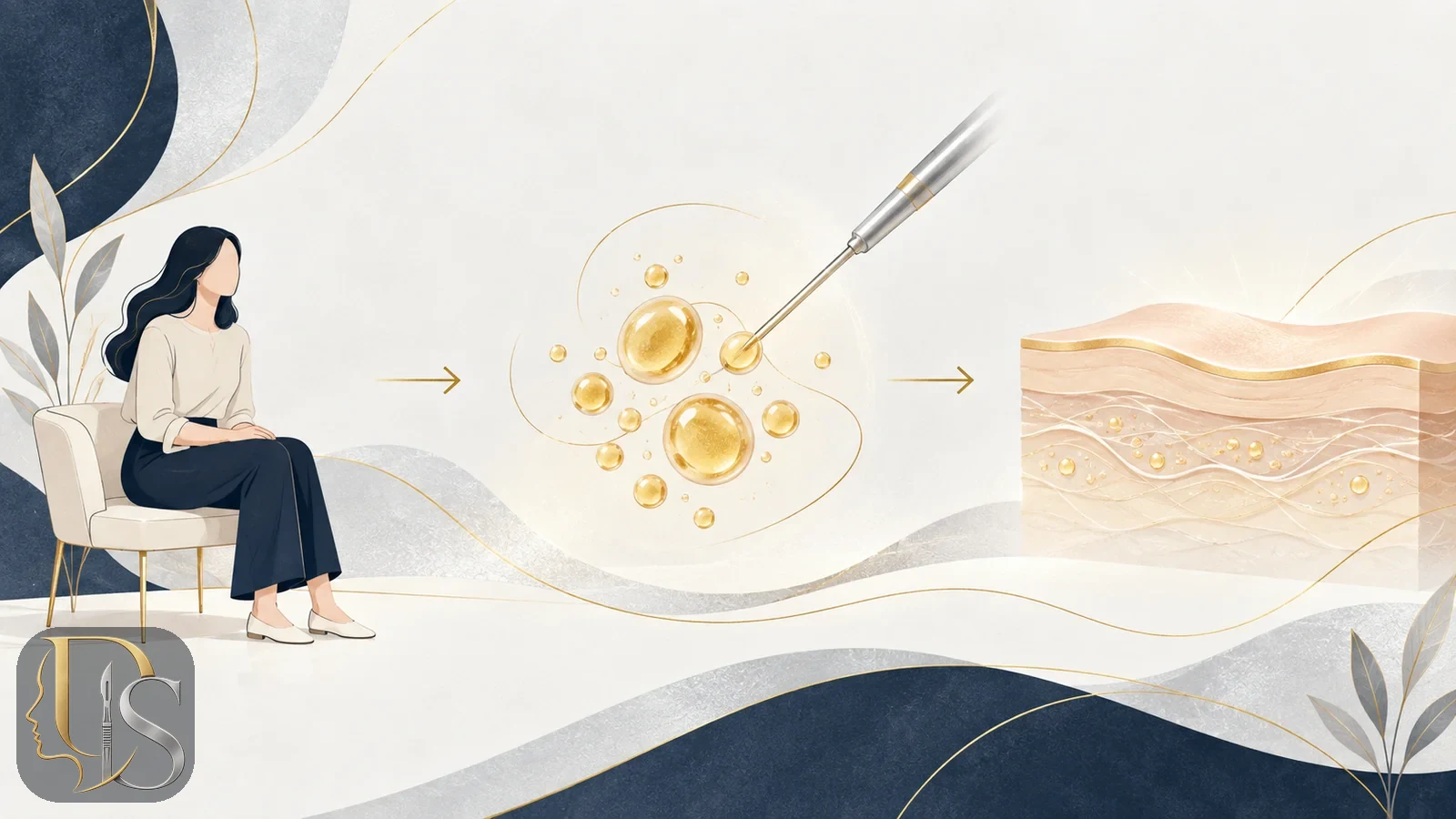
It depends on the cause. Temporary irregularity improves with patience and the garment. Structural irregularity may need surgery, such as filling a hollow with the person's own fat (lipografting) or gentle suction of a bulge. Which approach fits is decided at examination.
Non-surgical approaches
In the sources reviewed for this article, we did not find strong evidence that massage, radiofrequency or cavitation fully resolve structural irregularity. The small 2014 study of 18 women found therapeutic ultrasound plus lymphatic drainage helpful for firmness and swelling, but it did not target contour irregularity.
Surgical correction by skin condition
Pereira and Sterodimas (2010) propose three plans for iatrogenic abdominal contour deformities:
- No skin flaccidity: syringe-assisted lipectomy and lipografting.
- Flaccidity below the navel: mini-lipoabdominoplasty and lipografting.
- Flaccidity above and below the navel: lipoabdominoplasty and lipografting.
This is a treatment protocol for a case series, not a guarantee of results. When loose skin is the main issue, abdominoplasty is sometimes discussed. If your concern is loose, hanging skin rather than dents and waves, skin laxity after liposuction covers the causes and options separately.
The fibrosis algorithm
The 2024 Aesthetic Surgery Journal paper presents an algorithm for fibrosis and contour irregularities in secondary liposculpture and reports improvement on photographs, while acknowledging that evidence in this area is limited.
How can irregularities be prevented?
Nothing reduces the risk to zero, but several things help: a suitable candidate with elastic skin and a weight near goal, a surgeon with solid liposuction experience, even removal that avoids overtreating the superficial layer, and good garment use and follow-up. Cleveland Clinic and StatPearls both stress patient selection and skin elasticity.
Useful questions before surgery
- Technique: which method (traditional, Vaser and so on) and why? Our article on Vaser versus traditional liposuction explains the differences.
- Your skin: is elasticity adequate, or would laxity need a different operation?
- Realistic goals: what can liposuction do, and what can it not?
After surgery
Wear the garment as advised, walk regularly and clear any massage or device with your surgeon; see lymphatic massage after liposuction.
When should you talk to your surgeon about correction?

If a distinct irregularity remains after three to six months, or the skin feels stuck to the tissue below, it is time to discuss correction. Sooner only if you have pain, redness, discharge or a growing lump. Correction carries risk like the first operation, so expectations should be discussed openly.
Questions for the consultation
- Is my irregularity swelling or structural?
- Is the cause too little fat, fibrosis or loose skin?
- What is the least invasive option that could work?
- What result is likely and what are its limits?
Frequently Asked Questions
Is unevenness after liposuction normal?
Mild unevenness in the first weeks is common, and part of it is asymmetric swelling. StatPearls calls contour deformity the most frequent complication, and Mayo Clinic says it may be permanent. So whether yours is "normal" can only be judged after some months and by examination.
Does post-liposuction unevenness go away by itself?
The swelling-related part usually does, over about three to six months. Structural irregularity such as a fixed hollow, adhesion or scar does not fully clear on its own. If it persists beyond that window, a surgeon should assess it.
Can massage or devices cure irregularities?
In the sources reviewed here we found no strong evidence that massage or devices such as radiofrequency or cavitation cure structural irregularity. Lymphatic massage may reduce swelling. Ask your surgeon what makes sense for you before spending money.
How is irregularity corrected?
It depends on the cause: filling a hollow with the patient's own fat, gentle suction of a bulge, or, with loose skin, an operation such as lipoabdominoplasty. Pereira and Sterodimas describe three plans based on abdominal skin condition. The choice rests with your surgeon after examination.
How long should I wait before deciding on correction?
Usually at least three to six months until swelling resolves, per Cleveland Clinic. Deciding on inflamed, swollen tissue is not precise. If you have warning signs such as pain, redness, discharge or a growing lump, be seen sooner.
When should you consult a doctor
If a distinct irregularity remains after three to six months, or you have warning signs, consult your surgeon. To learn about the procedure, see the liposuction page and the body contouring page, and for current costs the services and pricing list. This article does not replace an in-person examination.
Sources
- Mayo Clinic — Liposuction
- Cleveland Clinic — Liposuction
- NCBI / StatPearls — Liposuction
- Pereira & Sterodimas, 2010 — Treatment of iatrogenic abdominal contour irregularities (Aesthetic Plast Surg)
- Mera-Cruz et al., 2024 — Fibrosis Management Algorithm in Secondary Liposculpture (Aesthet Surg J)
- Masson et al., 2014 — Manual lymphatic drainage and therapeutic ultrasound in liposuction and lipoabdominoplasty post-operative period (Indian J Plast Surg)
This article is educational and does not replace an in-person examination or consultation. Discuss any surgical decision with your own physician.
About the author
General Surgeon
Medical Council No.: 74530 · Verify in the Medical Council register
Specialist in general surgery focused on rhinoplasty, body contouring, abdominoplasty, VASER liposuction and aesthetic breast surgery.
- Specialist in general surgery
- Member of the Iranian Medical Council
- Specialist in body contouring, VASER liposuction and aesthetic breast surgery
Medically reviewed by a physician
See the full profileQuestions about this procedure?
A consultation covers your own anatomy, what is realistically achievable, and what it involves.
VASER LiposuctionComments
No comments yet. Be the first to write one.
Related articles
Firmness and Fibrosis After Liposuction: Normal or a Problem?
Firmness in the first weeks and months is usually normal swelling and healing and often softens. Fibrosis is persistent or lumpy firmness; pain, warmth, fever or a growing one-sided lump should be examined, not waited out.
Read moreLymphatic Massage After Liposuction: When, How Often, and Why
Gentle lymphatic drainage may help clear swelling after liposuction, but evidence comes from small studies, and your surgeon sets when to start and how many sessions. One-sided calf pain, fever or spreading redness need examination first.
Read moreVASER vs Traditional Liposuction: Does Ultrasound Help?
VASER softens fat with ultrasound before suction, while traditional liposuction relies only on cannula movement. Published reviews do not show VASER to be better across the board: its documented edge is limited to gynecomastia and some high-volume cases, and results are otherwise similar.
Read more