
Firmness and Fibrosis After Liposuction: Normal or a Problem?
In short
Firmness in the first weeks and months is usually normal swelling and healing and often softens. Fibrosis is persistent or lumpy firmness; pain, warmth, fever or a growing one-sided lump should be examined, not waited out.
Why does the area feel hard after liposuction?
After liposuction, the tissue under the skin is injured and inflamed, and fluid collects in it, which makes the area feel tight and firm. According to StatPearls, bruising usually settles in 1 to 2 weeks, swelling can last several weeks, and the final contour appears only after swelling subsides.
This article is educational and does not replace an in-person examination. If your firm area comes with severe pain or fever, contact your surgeon before reading further.
Three common reasons for temporary firmness
- Swelling and fluid: leftover fluid makes tissue tight and stretched.
- Healing inflammation: the body builds new cells and proteins to repair the injured tissue.
- Garment pressure: compression fabric can accentuate ridges and the feeling of firmness, but only temporarily.
How long should you wait?
Cleveland Clinic says it may take three to six months for swelling to go away completely, and Mayo Clinic mentions weeks to months before final results show. Firmness at one month is therefore not by itself a sign that something went wrong.
What is the difference between swelling, healing firmness and fibrosis?
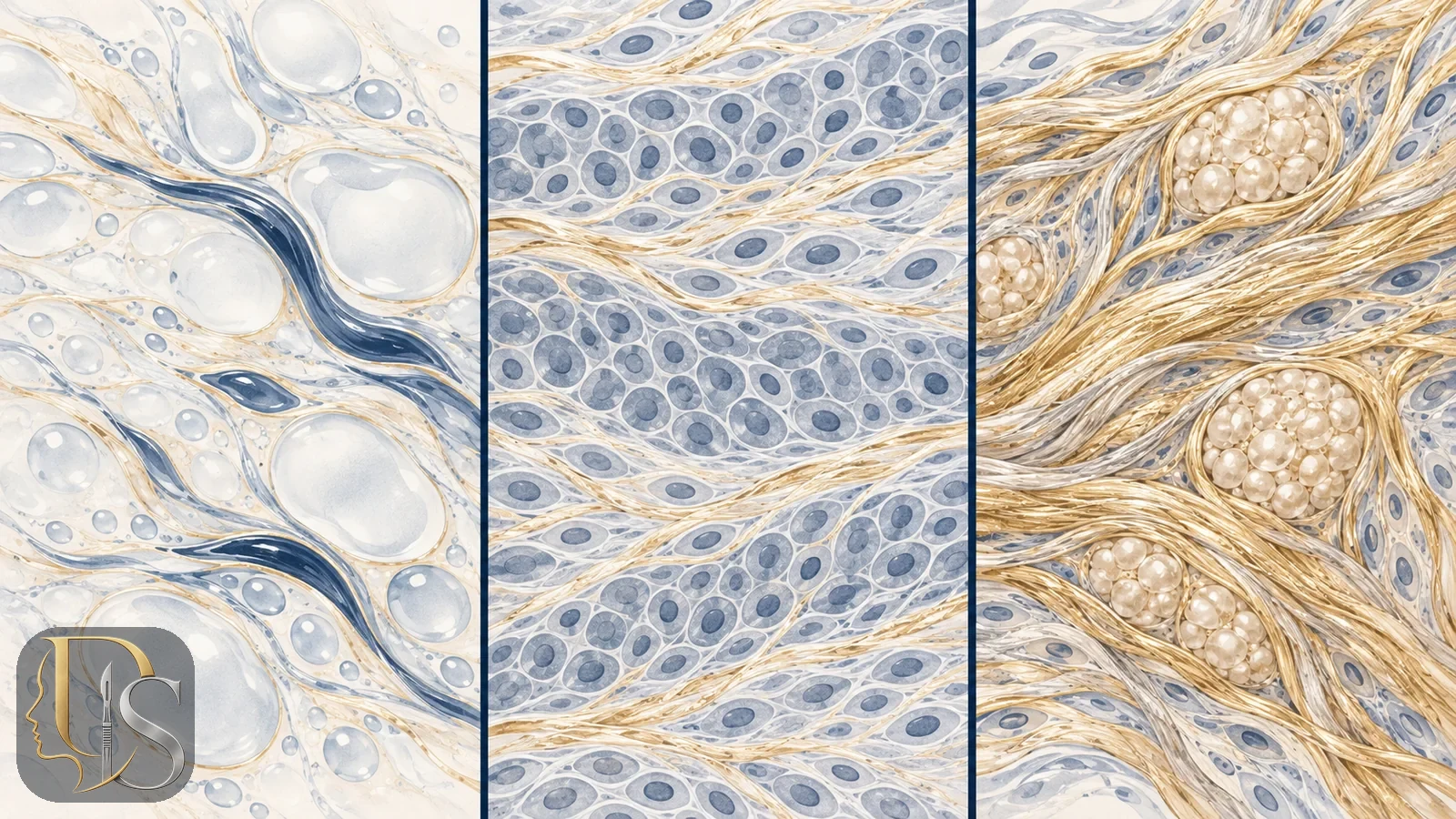
Swelling is softer, may pit under a fingertip, and eases over weeks. Healing firmness is more solid but softens month by month. Fibrosis, scar-like tissue under the skin, feels like a persistent lump, cord or plate that does not soften over time, or may even become more noticeable.
Comparison table
This is a general guide, not a diagnosis; the final distinction is made by your surgeon's touch and examination.
| Feature | Swelling | Healing firmness | Fibrosis |
|---|---|---|---|
| Feel | Soft, sometimes pits | Firm but even | Lump, cord or hard plate |
| Course over time | Decreases over weeks | Gradually softens | Persistent or unchanged |
| Pain | Mild to moderate | Mild | Usually mild, sometimes tender |
| Usual action | Garment, walking | Patience and follow-up | Surgeon assessment, targeted treatment |
Can a seroma feel firm too?
A seroma is a pocket of fluid under the skin. Mayo Clinic lists it as a liposuction complication that may need needle drainage. A fluid pocket can feel tight and raised and be mistaken for fibrosis, so any distinct lump should be seen by the surgeon.
Timeline: what to expect and when

Firmness is usually greatest in the first weeks and softens over the following months. Only two ranges here are directly sourced: bruising over 1 to 2 weeks (StatPearls) and complete resolution of swelling over three to six months (Cleveland Clinic). The middle rows of the table are clinical approximations and vary between people.
| Time after surgery | What is commonly seen |
|---|---|
| 1 to 2 weeks | Heavy bruising and swelling; firmness is common |
| 2 to 6 weeks | Swelling reducing; firmness and tenderness linger |
| 3 months | Most swelling resolved; tissue feels softer |
| 6 months | Final result largely settled |
If it is still firm at month three
If three months have passed and the firmness has not eased, or you can feel a distinct lump, it is a good time for a surgeon's exam. It is not necessarily serious, but open-ended waiting is not a plan.
Which signs are not normal?

Increasing pain, spreading warmth and redness, fever, discharge, or a growing one-sided lump are warning signs that need prompt attention. So are pain and swelling in one calf, or breathlessness, which StatPearls links to possible deep vein thrombosis and pulmonary embolism; these are rare but serious.
Signs that cannot wait
- Fever or chills with redness or warmth in the area.
- Discharge or a bad smell from an incision.
- Sudden one-sided calf pain or leg swelling.
- Shortness of breath or a racing heart.
Signs that need follow-up
Unchanged firmness after three months, a distinct lump, or an irregularity you can feel under the skin. These are not emergencies, but your surgeon should hear about them.
What is fibrosis and why is it worse in some people?
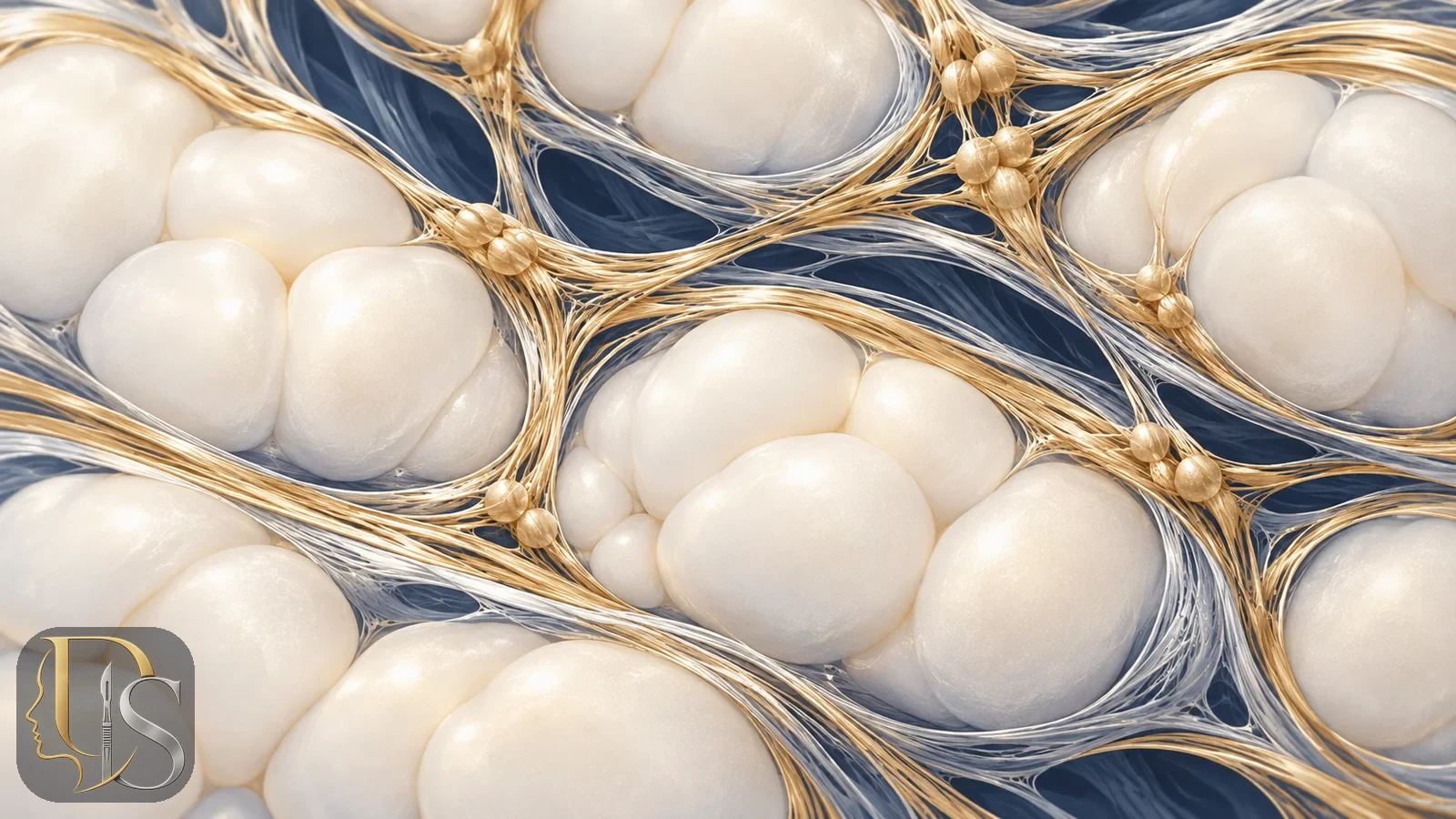
Here, fibrosis means scar tissue forming within the fat layer; the evidence on its exact cause and frequency is limited. A 2024 study in Aesthetic Surgery Journal on 74 women seeking secondary liposculpture found depressions in 99%, soft nodules in 95% and hard nodules in 81%. Because these were patients who came for correction, the numbers are not the rate across all liposuction patients.
Known contributing factors
StatPearls notes that fibrous fat in the superficial layers responds less well to suction, and that aggressive superficial treatment may cause contour irregularities or compromise to the overlying tissue. So technique, depth of work and each person's tissue all play a part.
Does massage break up fibrosis?
Strong evidence is lacking. In a small 2014 study of 18 women, 12 sessions of therapeutic ultrasound plus manual lymphatic drainage reduced firmness and pain, but the sample is small and the effect of each part cannot be separated.
What are the treatment options for firmness and fibrosis?

The first step is usually patience combined with the garment and light activity. If firmness persists after several months, options move to specialist physiotherapy and, in selected cases, surgical correction. The choice depends on your surgeon's examination, not on whichever device is advertised.
Non-surgical options
- Watchful waiting: most temporary firmness softens over months.
- Garment and movement: help control swelling and skin adaptation; your surgeon sets the duration.
- Physiotherapy: therapeutic ultrasound plus lymphatic drainage showed benefit in the small study above.
Surgical correction for persistent fibrosis
The 2024 paper presents an algorithm for fibrosis and contour irregularities in secondary liposculpture and reports a statistically significant improvement on photographs, but acknowledges that evidence in this area is limited and that the algorithm rests on one surgeon's experience. Secondary surgery is therefore an option, not a guarantee.
Commercial devices
Radiofrequency, cavitation and similar devices are heavily advertised. In the sources reviewed for this article, we did not find strong controlled evidence for their effect on post-liposuction fibrosis; ask your surgeon what actually makes sense in your case before you spend money.
What should you avoid doing without your surgeon's approval?

Deep, hard pressure, strong heat and high-pressure devices on freshly healing tissue are not advised without your surgeon's approval; they can increase pain and bruising and can hide the real cause of firmness. If the firm area is red, hot or painful, it needs to be examined first.
Do not drop the garment on your own
Cleveland Clinic and Mayo Clinic both describe wearing a compression garment for several weeks. Taking it off early or changing size without your surgeon's input may increase swelling and firmness.
Related reading on massage
To learn when and how gentle massage may be allowed, see lymphatic massage after liposuction.
Frequently Asked Questions
Is a hard abdomen after liposuction normal?
Yes, in the first weeks and months it is usually normal and due to swelling and healing. If it comes with severe pain, fever, redness or a growing one-sided lump, it should be examined sooner. Firmness that is unchanged after three months should also be followed up.
How long does firmness last after liposuction?
Most improvement happens over several weeks to three months, with full settling by six months or longer. Cleveland Clinic cites three to six months for swelling to resolve completely. It may take longer in areas with larger volumes removed.
What is the difference between fibrosis and swelling?
Swelling is softer and eases over weeks; fibrosis is firm, lumpy scar tissue that persists or does not soften. The final distinction is made by your surgeon's touch and examination, and unclear cases may need further assessment.
Does massage cure post-liposuction fibrosis?
The evidence is not strong. One small study found ultrasound therapy combined with lymphatic drainage reduced firmness, but it had only 18 participants. Deep massage too early may be harmful; agree on type and timing with your surgeon.
Does fibrosis last forever?
Not necessarily; much firmness is temporary and softens over months. If a lump or cord remains after six months, your surgeon can tell you whether physiotherapy is enough or whether secondary surgical correction should be considered.
When should you consult a doctor
Act immediately with fever, discharge, sudden calf pain or breathlessness. If firmness has not eased after three months or you feel a distinct lump, consult your surgeon. To learn about the procedure itself, see the liposuction page and body contouring page, and for current costs the services and pricing list. This article does not replace an in-person examination.
Sources
- Mayo Clinic — Liposuction
- Cleveland Clinic — Liposuction
- NCBI / StatPearls — Liposuction
- Mera-Cruz et al., 2024 — Fibrosis Management Algorithm in Secondary Liposculpture (Aesthet Surg J)
- Masson et al., 2014 — Manual lymphatic drainage and therapeutic ultrasound in liposuction and lipoabdominoplasty post-operative period (Indian J Plast Surg)
This article is educational and does not replace an in-person examination or consultation. Discuss any surgical decision with your own physician.
About the author

General Surgeon
Medical Council No.: 74530 · Verify in the Medical Council register
Specialist in general surgery focused on rhinoplasty, body contouring, abdominoplasty, VASER liposuction and aesthetic breast surgery.
- Specialist in general surgery
- Member of the Iranian Medical Council
- Specialist in body contouring, VASER liposuction and aesthetic breast surgery
Medically reviewed by a physician
See the full profileQuestions about this procedure?
A consultation covers your own anatomy, what is realistically achievable, and what it involves.
VASER LiposuctionComments
No comments yet. Be the first to write one.
Related articles
Lymphatic Massage After Liposuction: When, How Often, and Why
Gentle lymphatic drainage may help clear swelling after liposuction, but evidence comes from small studies, and your surgeon sets when to start and how many sessions. One-sided calf pain, fever or spreading redness need examination first.
Read moreVASER vs Traditional Liposuction: Does Ultrasound Help?
VASER softens fat with ultrasound before suction, while traditional liposuction relies only on cannula movement. Published reviews do not show VASER to be better across the board: its documented edge is limited to gynecomastia and some high-volume cases, and results are otherwise similar.
Read moreBumps and Waviness After Liposuction: Causes and Correction
Skin irregularity is a common liposuction complication, caused by uneven fat removal, low skin elasticity or scarring. Some is temporary swelling that fades over months; structural irregularity can be lasting and may need surgical correction.
Read more