Rhinoplasty Cost in Tehran: Why Quotes Differ So Much

In short
Rhinoplasty has no single price, because two quotes often count different things: one is the surgeon's fee alone, another includes hospital and anesthesia. The type of nose, revision surgery and airway work move the figure too.
Why Do Rhinoplasty Prices Vary So Widely?

The prices you hear for rhinoplasty can differ several-fold, and the main reason is that they are not pricing the same thing. One figure may be the surgeon's fee alone; another may include the hospital, anesthesia and follow-up. The second reason is the nose itself: two operations with the same name can involve very different amounts of work. This article is educational and does not replace an in-person consultation.
The American Society of Plastic Surgeons makes the same point about its own published average: it is only part of the total price and does not include anesthesia, operating room facilities or other related expenses. The "incomplete quote" is not peculiar to one country; it is how prices are usually given.
You will not find a price figure in this article, because a number written into an article goes stale. Current figures are on the services and pricing page, quoted in million Toman; here you will find what that figure is made of and how to compare two quotes fairly.
What Makes Up a Rhinoplasty Quote?

The full cost has six parts: the surgeon's fee, anesthesia, the hospital or surgical facility, pre-operative tests, medication and supplies afterwards, and follow-up visits. The same ASPS page lists these. When you are given a price, the first job is to find out which of the six it contains.
| Component | What it covers | The question to ask |
|---|---|---|
| Surgeon's fee | The operation and its planning | Is this figure the fee alone, or more? |
| Anesthesia | Anesthesiologist, drugs, monitoring | Is anesthesia charged separately? |
| Hospital or facility | Operating room, recovery, stay | Which facility, and is it included? |
| Pre-operative work-up | Blood tests, anesthesia review, imaging if needed | Which tests, and who pays? |
| Medication and supplies | Pain relief, antibiotics if prescribed, tape and cast | Included or separate? |
| Follow-up | Cast removal, visits in the following months | How many visits, and for how long? |
"With hospital" and "without hospital"
This is usually the biggest difference between two quotes. Some are all-in; others are the surgeon's fee, with the hospital and anesthesia added later. Neither way is wrong, provided it is stated plainly. In the price table on this site, each figure is marked as including the hospital fee or as charged separately.
What Raises or Lowers the Cost?

Once the components are clear, what moves the figure is the amount of work: the type of nose, a first operation or a revision, whether breathing needs correcting, operating time, and the facility. ASPS describes the surgeon's fee as depending on experience, the type of procedure and the geographic location.
| Factor | Usual effect on cost | Why |
|---|---|---|
| Fleshy nose, thick skin | Higher | More tip work, cartilage grafting |
| Straightforward bony nose | Lower | Changes are more limited and predictable |
| Revision (second) surgery | Higher | Scar tissue, shortage of cartilage, longer operation |
| Septal correction at the same time | Higher | Additional work in the same operation |
| Combined with another procedure | Total lower than two separate operations | One anesthetic, one stay |
| Facility and length of stay | Variable | Operating-room tariff and stay |
Fleshy and bony noses
A fleshy nose usually takes more work: thick skin hides detail and soft cartilage will not hold the tip, so structure has to be built with grafts. A simple bony nose, with thin skin and firm cartilage, often needs less. The difference is explained in the guide to nose shapes.
First operation or revision
The StatPearls review of rhinoplasty describes revision as the most complicated kind of rhinoplasty: the tissue has already been cut and scarred, there may not be enough cartilage left in the nose for grafts, and it sometimes has to be taken from the ear or a rib. That means more time in the operating room and therefore more cost.
Correcting breathing in the same operation
If the septum is deviated or the nasal valve is narrow, it is corrected in the same session. Septoplasty is a functional operation, not a cosmetic one, and that distinction matters for insurance. Ask at consultation how it is charged.
Combined surgery
Some patients have rhinoplasty together with another procedure, such as blepharoplasty, under one anesthetic. The total is usually less than two separate operations because anesthesia and the stay are charged once — but operating time and risk rise too, and that is a medical decision, not a financial one.
How Do You Compare Two Quotes?

A fair comparison means turning both quotes into an all-in figure: write every component side by side and add them up. Until you know what each number counts, comparing two raw figures is misleading. Ask both sides these eight questions and get the answers in writing.
- What does this figure include? Fee, anesthesia, hospital, tests, medication, follow-up.
- Where is the operation performed? The name of the hospital or facility, and the type of stay.
- Who gives the anesthetic? Is an anesthesiologist present throughout?
- What will be done to my nose? The bridge only, or bridge, tip and septum?
- When does the figure become final? Before the examination, or after?
- What could change it? For example, needing cartilage from the ear or a rib.
- How long does follow-up last, and at what cost?
- If the result needs correcting, who pays?
A firm price before any examination
An exact figure is not possible without seeing the nose, because the examination is what determines the amount of work. A firm price given over the phone is usually a "from" figure, or it changes later. The more transparent arrangement is a published starting price, with the final figure given after examination.
What Does a Very Low Price Tell You?

A low price is not in itself a sign of poor quality, but it should be clear where the saving comes from. In rhinoplasty, cost can only be cut in a few places: the facility, the anesthesia team, the time allowed for the operation, and the follow-up. If a quote is clearly lower, ask which of these is different.
- Where: an operating room in an equipped hospital is not the same, in cost or in safety provision, as surgery in a non-hospital setting.
- Anesthesia: an anesthesiologist and full monitoring are a cost that should not be removed.
- Time: an operation that should take 2 to 3 hours loses its detail if it is compressed.
- Follow-up: the visits in the following months are part of the operation, not an extra.
Count the cost of a second operation
StatPearls reports revision rates of up to 15 percent after rhinoplasty, and revision, as described above, is harder and more expensive than the first operation. The cheapest rhinoplasty is the one that is done once; the comparison should be about the likelihood of a sound result, not the figure alone.
A high price is no assurance either
Equally, a higher figure proves nothing on its own. ASPS notes that the surgeon's experience and your comfort with him or her are just as important as the final cost. Real outcomes on noses like your own are a better guide than price; see Dr. Salmani Moghaddam's results gallery.
What Costs Sit Outside the Quote?

Part of the real cost never appears in any surgeon's quote, because it belongs to your own life: time off work, a companion and, if you are travelling, flights and accommodation. For a patient coming from abroad these can rival the surgical fee, so budget for them from the start.
- Length of stay: allow 7 to 10 days in Tehran for consultation, tests, surgery and the first follow-up.
- Accommodation: somewhere quiet, with a bed you can prop yourself up in, for the whole stay.
- A companion: needed on the day of surgery and for a day or two afterwards.
- Time off work: initial recovery usually takes 1 to 2 weeks, and you will be visibly bruised for part of it.
- Currency: prices are quoted in Toman; ask how payment is taken and at what rate the figure is fixed.
- A second trip: part of follow-up can be done remotely with photographs; ask what would require you to return.
Insurance, Instalments and Public Hospitals

Three money questions come up repeatedly: does insurance pay anything, can it be paid in instalments, and is a public hospital cheaper. Each depends on individual circumstances and should be settled before surgery.
Insurance
Insurers do not cover purely cosmetic surgery. The functional part is different: ASPS explains that when rhinoplasty is performed to improve breathing, that part is considered reconstructive and may be covered, subject to a documented examination and prior authorization from the insurer. If you have international cover, ask your insurer before travelling what documentation it would need; do not assume cover for surgery abroad.
Paying in instalments
The same source notes that many surgeons offer financing plans and advises patients to ask. Terms differ between practices; clarify them at consultation, before a date is set.
Public and teaching hospitals
Some teaching hospitals perform rhinoplasty at lower cost. The difference usually lies in three things: who performs the operation, the waiting time, and how much choice the patient has over surgeon and date. Ask about those three before deciding.
How Is the Price Given With Dr. Salmani Moghaddam?
The starting figure for each procedure is published on the site, and the final figure is given after examination. On the services and pricing page each figure is marked as including the hospital fee or not, with a note that these are starting points rather than a price commitment.
- Before consultation: you know the starting figure and can plan around it.
- At consultation: the type of nose, any airway correction and the amount of work are established, and the final figure follows from them.
- Where: surgery is performed in an equipped hospital with an anesthesia team.
- Afterwards: follow-up visits are part of the same course of care.
Operating time, anesthesia and recovery are set out on the rhinoplasty page.
Frequently Asked Questions
Does a fleshy nose cost more than a bony one?
Usually, yes. A fleshy nose needs more work on the tip and often cartilage grafting, which lengthens the operation. The exact figure depends on the examination, not on the name of the nose type.
Why is revision rhinoplasty more expensive?
Because the surgeon is working with scar tissue and altered structure, and the cartilage needed for rebuilding may no longer be available in the nose. StatPearls describes revision as the most complicated kind of rhinoplasty; the operation is longer and may require cartilage from the ear or a rib.
Does a higher price mean a better result?
Not necessarily. Price reflects the components, the facility and the amount of work. A more reliable guide is real outcomes on similar noses, candour about risks, and clarity about what the figure does and does not include.
Does the price change during the year?
It can, because hospital tariffs and the cost of supplies change. That is why no figure appears in this article and the current one is published only on the services and pricing page.
Should I take an offer of free or heavily discounted rhinoplasty seriously?
First ask who performs the operation, where, under what anesthesia, and who is responsible for follow-up. If those four answers are not clear, a low figure is not enough reason to decide on surgery.
When will I know my final figure?
After examination at the consultation. Before that only the starting figure can be given, because the amount of work on your nose is not yet known.
When Should You See a Surgeon?
If you have been given several different prices and do not know which to rely on, a consultation with an examination will help more than any further searching: it establishes what your nose needs and what the final figure is based on. You can book a consultation online, and starting figures are on the services and pricing page.
Sources
This article is educational and does not replace an in-person examination or consultation. Discuss any surgical decision with your own physician.
About the author
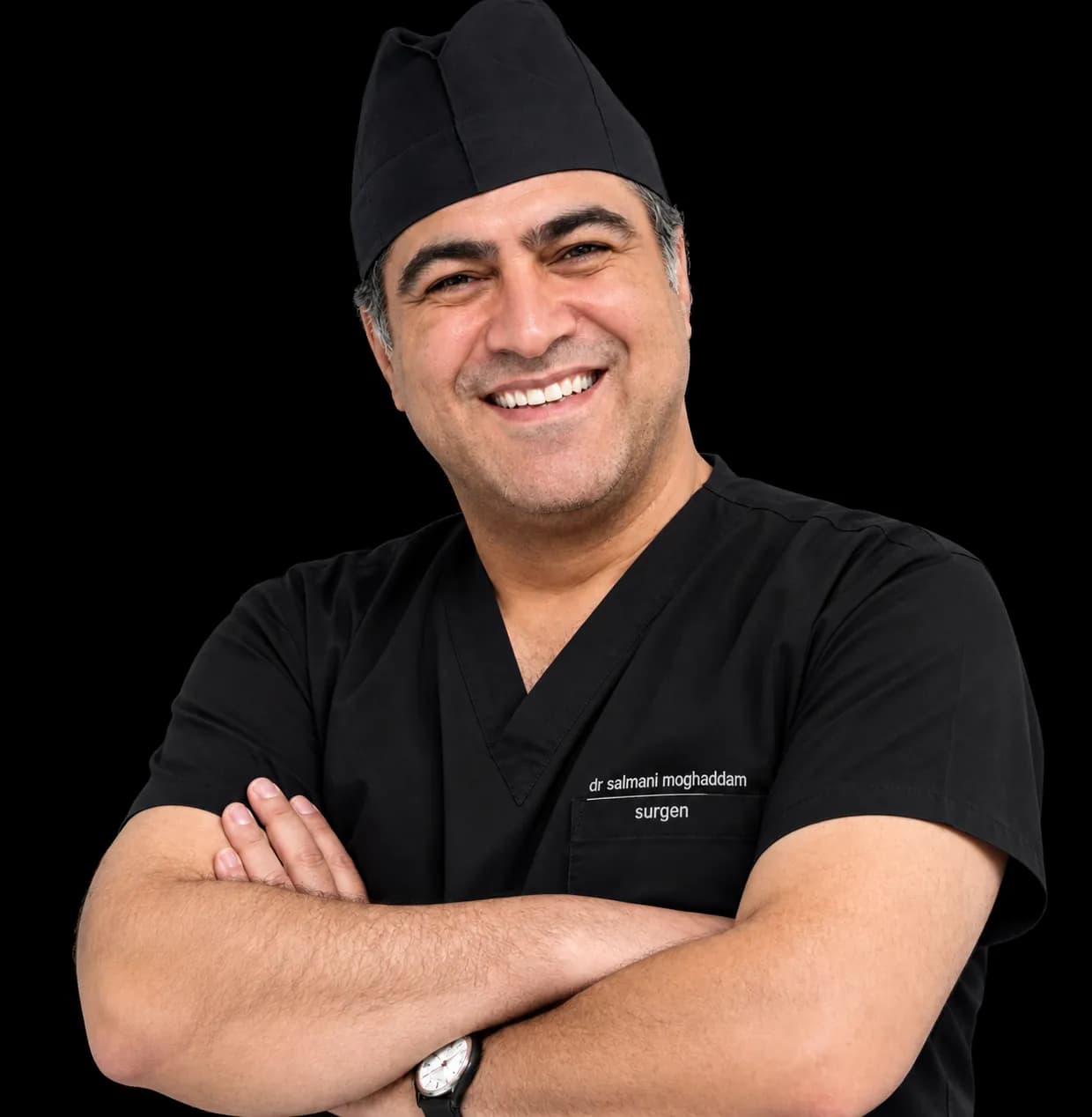
General Surgeon
Medical Council No.: 74530
Board-certified general surgeon focused on rhinoplasty, body contouring, abdominoplasty, VASER liposuction and aesthetic breast surgery.
- Board-certified general surgeon
- Member of the Iranian Medical Council
- Specialist in body contouring, VASER liposuction and aesthetic breast surgery
Medically reviewed by a physician
See the full profileQuestions about this procedure?
A consultation covers your own anatomy, what is realistically achievable, and what it involves.
Rhinoplasty (Nose Surgery)Comments
No comments yet. Be the first to write one.
Related articles
Doll (Button) Nose Rhinoplasty: Who It Suits and Its Limits
A doll nose is small, with a narrow curved bridge and an upturned tip. It is most achievable on a bony nose with thin skin and firm cartilage, limited on a fleshy one, and over-reduction can harm breathing and is difficult to revise.
Read moreAquiline Nose Rhinoplasty: The Hump and the Drooping Tip
An aquiline nose combines a prominent hump with a tip that curves downward. Correcting it is not just hump removal: the tip has to be rotated up and given cartilage support, or it looks more drooped once the hump is gone.
Read moreRoman Nose: What It Is and How Rhinoplasty Changes It
A Roman nose has a raised bridge with a gentle, continuous curve and a tip that does not droop. Correcting it means lowering the hump by resection or dorsal preservation; a natural result avoids a scooped bridge and stays in proportion with the face.
Read more