Nostril Asymmetry After Rhinoplasty: Causes and Timeline

In short
Nostril asymmetry is common right after rhinoplasty due to uneven swelling and internal splints, and usually fades within three to six months. Asymmetry still visible after a year usually has a structural cause and needs an in-person evaluation.
What Is Nostril Asymmetry After Rhinoplasty?
Nostril asymmetry after rhinoplasty means the two nostrils differ noticeably in size, shape, or angle when viewed from the front or from below the nose. Nearly every patient notices some asymmetry in the first weeks after surgery, and in most cases it is a normal, temporary part of healing. This article is for general education and does not replace an in-person evaluation; if you are concerned about your own results, the most reliable step is a follow-up visit with the surgeon who performed your procedure.
The nose heals unevenly by nature — soft tissue, cartilage, and skin each respond to surgery at different speeds, and this difference shows up as temporary asymmetry between the two nostrils before it gradually settles. This should not be confused with overall crookedness of the nasal axis, which usually comes from a shift in the bone or cartilage along the bridge, not from the shape of the nostrils themselves.
For patients who traveled from abroad for surgery, this timing matters directly: the asymmetry you notice in photos taken right before your flight home is very often swelling, not the final result.
Why Nostril Asymmetry Happens After Surgery

Nostril asymmetry is usually a mix of temporary factors — swelling, internal packing, skin behavior — and occasionally an underlying structural factor. Separating the two is the first step in knowing whether the asymmetry you're seeing is expected or worth a closer look.
Uneven Swelling and Inflammation
Soft tissue around the nostrils rarely swells at exactly the same rate on both sides, because the degree of surgical manipulation is never perfectly identical between the two sides even when the surgical goal is full symmetry. This uneven swelling peaks in the first week and is the most common reason patients notice a difference right after surgery.
Internal Splints and Packing
Many surgeons place internal silicone splints or packing to hold the septum in its new position. These devices physically reshape the nostrils for the first several days, often making the packed side look narrower or asymmetric; this effect resolves once the packing is removed. Keeping that same splint and packing dry during bathing matters just as much; the safe way to do that is covered in our guide to showering and washing your face after rhinoplasty.
Skin Thickness and Tension
Thicker or oilier skin holds swelling longer and resists the surgeon's reshaping more than thinner skin does, which can make temporary asymmetry last longer than average. In thinner skin, the true shape of the nose becomes visible sooner, and a reliable judgment about final symmetry is also possible sooner.
Uneven Tissue or Cartilage Removal
A smaller share of asymmetry cases trace back to an actual difference in how much tissue was removed or how the tip cartilage was shaped on each side. This type does not resolve with swelling, because its source is not swelling — confirming it usually means waiting until all swelling has fully settled.
Pre-Existing Septal Deviation
Many patients already have a mild septal deviation before any surgery, which can cause slight nostril asymmetry that predates the operation. If this deviation is not fully corrected during rhinoplasty, the same underlying asymmetry can remain afterward and is sometimes mistaken for a new, surgery-related issue.
Natural Facial Asymmetry
Almost no face is perfectly symmetric — the two halves of anyone's face differ slightly, from eye spacing to cheek height. Rhinoplasty does not erase this underlying facial asymmetry; it only brings the nose into better balance with it. Part of the nostril asymmetry visible after surgery simply reflects this natural asymmetry, not a surgical shortcoming.
Normal or a Problem? Recovery Timeline Table

The most reliable way to tell normal asymmetry from a concerning one is how it changes over time: asymmetry that fades week by week is almost always swelling-related; asymmetry that is still fixed, or has worsened, after month nine to twelve is more likely structural.
| Timeframe | What's Normal | Warning Sign |
|---|---|---|
| Week 1-2 | Swelling, bruising, visible asymmetry, shape difference from packing | Ongoing bleeding, increasing pain, fever |
| Week 3-6 | Swelling gradually decreasing, asymmetry fading but still visible | Asymmetry getting worse instead of better |
| Month 2-6 | Near-final shape emerging, minor differences remain | Clear breathing difference between the two nostrils |
| Month 9-12 | Final shape settling, even thick-skin swelling mostly resolved | Persistent, obvious size or shape difference |
According to the American Society of Plastic Surgeons (ASPS), residual tip swelling can continue for up to a year after surgery, especially in patients with thicker skin — which is why final judgment about nostril symmetry should wait until this window has passed. If you traveled internationally for your surgery, plan your in-person follow-up visit, and any decision about a revision consultation, around this timeline rather than around how the nose looks in week one.
Thick Skin vs. Thin Skin: How Skin Type Changes the Picture
Skin type directly affects how long and how severe temporary asymmetry looks. Thick, oily skin and thin, fine skin follow two different healing patterns, and knowing which one applies to you sets more realistic expectations.
| Factor | Thick Skin | Thin Skin |
|---|---|---|
| Swelling resolution speed | Slower, often through month 12 | Faster, often by month 3-6 |
| Visibility of tip detail | Emerges later | Emerges earlier and more precisely |
| Risk of prolonged swelling-related asymmetry | Higher | Lower |
| Sensitivity to direct pressure on the nostrils | Lower | Higher |
With thick skin, patience before final judgment matters more — asymmetry still visible at month four can be entirely normal and continue improving through month ten or twelve. With thin skin, on the other hand, asymmetry that persists past month six is worth a closer look sooner.
Types of Nostril Asymmetry by Location
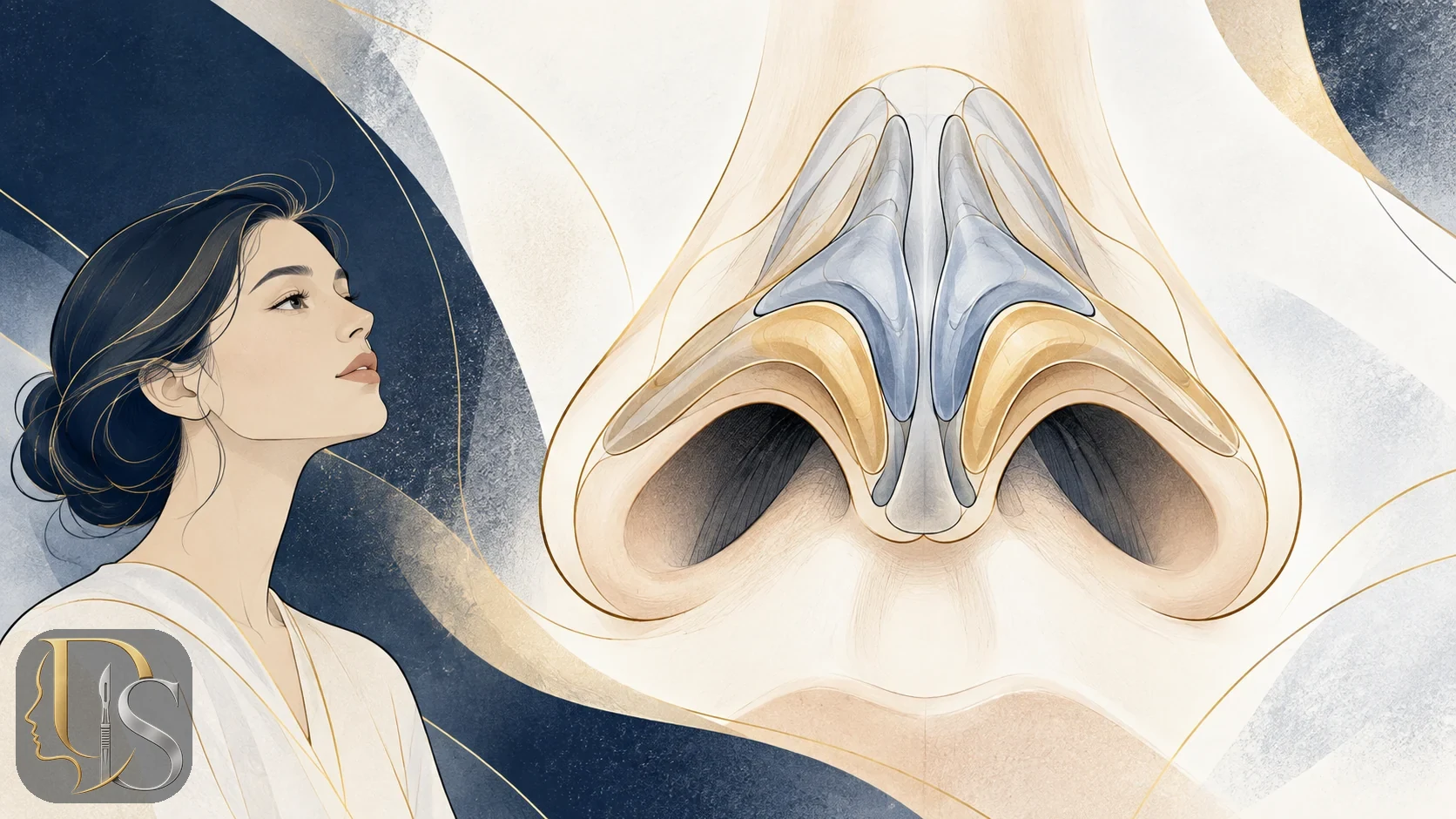
Nostril asymmetry is not one single problem; where exactly the difference shows up clarifies both the cause and the correction. Three common locations are nostril size itself, the alae (nostril wings), and the columella.
Difference in Nostril Size
When one nostril looks larger or more elongated than the other, uneven tip swelling or a minor difference in internal tissue removal is usually responsible. This type most often fades with time and needs no specific action.
Alar (Nostril Wing) Asymmetry
The ala is the soft, rounded tissue surrounding each nostril. Differences in its width or curve usually relate to skin tension during surgery or a pre-existing difference in tissue thickness between the two sides, and correcting it, if needed, tends to be more precise and localized than other types.
Columellar Deviation
The columella is the strip of tissue and cartilage between the two nostrils. When it is tilted or off-center, both nostrils can look asymmetric relative to it even if their individual sizes match. This type is more often structural and, unlike swelling-related asymmetry, does not correct itself over time.
When Does Nostril Asymmetry Need a Doctor's Attention?

A follow-up visit is worth scheduling when asymmetry is not fading over several months, is affecting breathing through one nostril, or comes with pain, unusual discharge, or a sudden change in shape. These signs can point to something beyond simple cosmetic asymmetry.
- Noticeable breathing difference between the nostrils: if one side is clearly harder to breathe through, the septum or nasal valve may be involved.
- Asymmetry worsening after month six: normal healing trends toward improvement; gradual worsening is not typical and deserves a look.
- Persistent pain, redness, or discharge: these can signal infection or a scar-tissue reaction and deserve earlier evaluation than the usual timeline.
- Lasting dissatisfaction even after a full year: once the final shape has settled and the asymmetry still bothers you, it's reasonable to discuss corrective options.
For patients now living abroad, sending clear, well-lit photos from multiple angles to your surgeon's clinic is a practical way to get an initial read before deciding whether an in-person trip is needed.
Tracking Nostril Asymmetry Progress at Home
The most reliable way to judge real healing progress is comparing photos, not a daily mirror check — momentary swelling, for example right after waking up, can be misleading.
- Consistent angle and lighting: every one to two weeks, take photos from the front and from below the nose under the same lighting, ideally natural daylight, so comparisons are accurate.
- Avoid repeated pressing or touching: pressing the tip repeatedly to "check" on it can prolong localized swelling and slow the natural healing curve; the same indirect pressure comes from everyday mouth movements like brushing your teeth or shaving, covered in our guide to shaving, brushing teeth, and talking after rhinoplasty.
- Log the date with each photo: this helps your surgeon assess the actual trend, not just a single moment, at your follow-up visits.
- Share photos with the clinic when concerned: before booking an in-person visit, sending clear photos can help determine whether an earlier evaluation is actually needed.
Sleep position and everyday pressure on the nose also play a role: sleeping on your side or resting heavy glasses on the nose in the first weeks can put uneven pressure on healing tissue and keep swelling higher on one side. That's why most surgeons recommend sleeping on your back and avoiding heavy eyewear during the first month.
How Nostril Asymmetry Is Corrected
The right approach depends on the cause and severity: mild, purely cosmetic asymmetry usually responds to non-surgical measures, while structural or breathing-related asymmetry usually needs revision surgery. Either decision should wait until the result has fully settled and follow a direct exam by the surgeon.
Non-Surgical Options

- Surgeon-guided massage: in some patients, regular massage of the tip area in the first months helps distribute underlying scar tissue more evenly.
- Taping: temporary medical tape is used by some clinics as a supportive measure to guide soft-tissue healing.
- Temporary filler: for very mild, purely surface-level asymmetry, some surgeons use filler to balance volume between the two sides temporarily; it is not a permanent fix and should only be done by the original surgeon or a physician fully aware of the surgical history.
Revision Rhinoplasty
When asymmetry has a structural cause — a deviated columella or a real cartilage difference between the two sides — revision (secondary) rhinoplasty is the only way to correct it definitively. This surgery is usually more complex than the first, because the surgeon has to work with previously scarred tissue; that's why most surgeons recommend waiting at least nine to twelve months after the first operation for swelling and tissue to fully settle. Full details on the procedure and its recovery are covered on the rhinoplasty service page.
For patients coordinating a revision from another country, this waiting period also affects trip planning: booking a consultation too early, before swelling has settled, rarely gives an accurate picture of what actually needs correcting. Nostril asymmetry itself should also not be confused with overall nasal axis deviation — that topic is covered separately in Is a Crooked Nose After Rhinoplasty Normal?
The Surgeon's Role in Preventing Asymmetry

Much of structural asymmetry — unlike swelling-related asymmetry — can be prevented at the pre-operative planning stage. A careful exam of baseline facial symmetry, assessment of any septal deviation before surgery, and a plan that considers each nostril individually all reduce the likelihood of noticeable asymmetry afterward. Part of this evaluation typically includes standardized photographs from multiple angles before surgery, so that any pre-existing asymmetry is clear to both surgeon and patient before finalizing the surgical plan.
At Dr. Salmani's practice, rhinoplasty planning is never done in isolation from the rest of the face; the balance of the tip, alae, and nostrils is assessed together with the jaw, chin, and full facial profile. This approach comes directly from his background in general surgery and body contouring, where precise tissue management and anatomical symmetry are central skills — the same background that applies just as directly to planning against nostril asymmetry.
Frequently Asked Questions
Why do nostrils look bigger right after rhinoplasty?
Swelling in the nasal tip can push the alae outward, making the nostrils look larger or rounder than before surgery. As swelling subsides over the following months, this effect usually fades toward the true final shape.
Do decongestant nasal sprays affect nostril asymmetry?
Steroid or decongestant nasal sprays used without a surgeon's guidance can swell or dry the internal nasal lining unevenly, temporarily changing how the nostrils look. Any nasal spray use during recovery should be cleared with your surgeon first.
Why are internal splints or packing used after nose surgery?
Internal splints and packing hold the septum and soft tissue in their new position so they don't shift during the sensitive first days. Until removed, this device can make the nostrils look temporarily asymmetric; the truer shape appears once it's taken out.
Is mild nostril asymmetry normal in people who haven't had surgery?
Yes, a slight difference between the two nostrils exists in many people with no surgical history at all, as part of the natural variation in facial anatomy. Real concern arises only when the difference is pronounced or newly appeared after a procedure.
What percentage of rhinoplasty patients experience nostril asymmetry?
Mild, temporary asymmetry in the first weeks is seen in nearly all patients. According to figures cited by plastic surgery associations, only a smaller share of rhinoplasties overall — roughly 5 to 15 percent, not specifically for nostril asymmetry — eventually require revision surgery.
Can nose exercises or massage fix nostril asymmetry?
Gentle massage under a surgeon's direction can help distribute swelling and underlying scar tissue more evenly, but it cannot correct structural asymmetry rooted in cartilage or bone. Any exercise or massage routine should only be done with your surgeon's approval.
Is a difference in the nostril wings the same as a difference in nostril size?
Not necessarily. The ala is the soft outer tissue around each nostril, while nostril size relates to the internal breathing passage itself. The two alae can look slightly different from each other without any real difference in nostril size or breathing quality — an in-person exam can tell the two apart.
When to See Your Doctor
If your nostril asymmetry is still clearly visible after month nine, appears to be getting worse, or comes with breathing trouble, schedule a visit with your surgeon. Evaluating it earlier than this window usually isn't reliable, since swelling has not fully resolved — but any warning sign, such as ongoing bleeding, worsening pain, or fever, should be checked immediately regardless of timing. Current pricing for rhinoplasty and revision surgery is listed on the services page.
References
This article is educational and does not replace an in-person examination or consultation. Discuss any surgical decision with your own physician.
About the author
General Surgeon
Medical Council No.: 74530
Board-certified general surgeon focused on body contouring, abdominoplasty, VASER liposuction and aesthetic breast surgery.
- Board-certified general surgeon
- Member of the Iranian Medical Council
- Specialist in body contouring, VASER liposuction and aesthetic breast surgery
Medically reviewed by a physician
See the full profileQuestions about this procedure?
A consultation covers your own anatomy, what is realistically achievable, and what it involves.
Rhinoplasty (Nose Surgery)Comments
No comments yet. Be the first to write one.
Related articles
Shaving, Brushing Teeth, and Talking After Rhinoplasty
Gentle shaving away from the bridge, soft-brush tooth brushing, and less talking are usually fine within days of rhinoplasty, since all three move the mouth and can pressure the healing area. Waxing and threading should wait until swelling settles.
Read moreShowering and Washing Your Face After Rhinoplasty
After rhinoplasty, showers are usually replaced with a shallow bath or sponge washing until the splint or tape comes off, keeping water away from the face. Once removed, your surgeon's approval allows lukewarm showers without pressure on the nose.
Read moreSafe Sneezing and Nose Care After Rhinoplasty
After rhinoplasty, sneeze with your mouth open and do not blow your nose until your surgeon gives clearance. Use approved saline and external care for congestion, and report heavy bleeding, new severe pain, splint displacement, or visual changes.
Read more