Crooked Nose After Rhinoplasty: Normal or a Problem?

In short
A crooked nose weeks after rhinoplasty is usually asymmetric swelling settling unevenly, fading within three to six months. Deviation still visible after a year, or that worsens, is usually structural and needs an in-person evaluation.
Why Does the Nose Look Crooked After Rhinoplasty?

A crooked-looking nose after surgery means the nasal midline appears shifted away from the center of the face. In most patients, the cause is asymmetric soft-tissue swelling, not a true structural problem: because the nose is reshaped from several angles during surgery, swelling rarely resolves evenly on both sides, and that temporary imbalance shows up in the mirror as deviation.
This article is educational and does not replace an in-person evaluation. If you are concerned about how your nose looks after surgery, the most reliable next step is a follow-up visit with the surgeon who performed your procedure.
Swelling-Related Deviation vs. True Structural Deviation

The key factor in judging a crooked nose is timing. Deviation that appears right after surgery and gradually fades is almost always swelling. Deviation that is still present after month six, or that gets worse instead of better, more likely points to a shift in the underlying cartilage or bone.
| Timeframe | What's Normal | Warning Sign |
|---|---|---|
| Week 1-2 | Asymmetric swelling and bruising, visible deviation head-on | Persistent bleeding, severe one-sided pain |
| Week 3-6 | Splint removal, deviation still visible but fading | Sudden worsening after any impact |
| Month 2-6 | Gradual resolution of swelling, truer shape emerging | Deviation that gets more obvious each month |
| Month 6+ | Final shape largely settled | Remaining deviation plus breathing difficulty |
According to the American Academy of Facial Plastic and Reconstructive Surgery (AAFPRS), final nasal swelling can take up to 12 months to fully subside, especially in thicker skin — which is why judging the final shape too early is often misleading.
Common Causes of a Crooked Nose After Surgery

A crooked nose usually traces back to one of these causes, not necessarily a surgical error:
- Asymmetric soft-tissue swelling: the most common cause in the first month; it resolves on its own.
- Septal cartilage displacement: if the septum's structural support isn't fully stabilized during healing, it can shift to one side.
- Pre-existing facial asymmetry: most faces aren't perfectly symmetrical before surgery, and rhinoplasty can make an existing asymmetry more noticeable.
- Trauma during recovery: sleeping face-down, an accidental bump, or removing the nasal splint too early can displace the still-healing structure.
- Not following aftercare instructions: such as wearing glasses or blowing the nose forcefully before it's cleared.
- Surgical management of cartilage structure: in rare cases, insufficient septal support or uneven tissue removal during surgery leads to true structural deviation.
Tip Deviation vs. Bony Deviation: What's the Difference?

Deviation at the nasal tip usually comes from asymmetry or a minor shift in the tip cartilage, and it often improves with time and gentle massage. Deviation in the bony area (the upper nose, near the brow) usually comes from the nasal bones not being fully aligned during surgery; because bone heals rigidly, it does not self-correct and, if it persists, generally needs a closer look from your surgeon.
When Is a Crooked Nose a Real Concern?

Signs that should not be ignored
Contact your surgeon sooner than your scheduled follow-up if you notice any of the following: deviation that increases instead of decreasing after month six; deviation accompanied by persistent breathing obstruction on one side; sudden, pronounced asymmetry after a bump or fall; or pain that isn't improving over time. None of these automatically means the surgery failed, but each warrants a direct examination.
How to Help Prevent a Crooked Nose After Surgery

- Avoid sleeping on your stomach or side: sleeping on your back with your head elevated is recommended for at least 3-4 weeks after surgery.
- Protect your nose from any impact: contact sports, rough play with children, or pets should wait until your surgeon clears you.
- Keep the splint and tape on as instructed: removing it early destabilizes the still-healing structure.
- Don't wear glasses too soon: the weight of glasses resting on the bridge can shift the shape in the early weeks.
- Attend every follow-up visit: your surgeon can distinguish normal swelling-related asymmetry from a real problem earliest at these checkpoints.
Treating a Crooked Nose: From Watchful Waiting to Revision Rhinoplasty

For mild, swelling-related deviation, watchful waiting and follow-up are usually all that's needed; some surgeons recommend gentle massage over a defined window for minor tip asymmetry. For structural deviation that is still clearly present after a full year, the only definitive fix is revision rhinoplasty — a second, more specialized surgery that re-aligns the cartilage and bone.
According to the American Society of Plastic Surgeons (ASPS), revision rhinoplasty is generally recommended no sooner than 12 months after the first surgery, so swelling has fully resolved and the tissue is ready for a second procedure. Current rhinoplasty pricing is listed on the practice's services page.
Frequently Asked Questions
Why does my nose look crooked after surgery?
In most cases, the cause is asymmetric soft-tissue swelling, which is normal in the first weeks. Less commonly, septal cartilage displacement, trauma during recovery, or incomplete bone alignment during surgery leads to more lasting deviation.
How long is a crooked nose normal after rhinoplasty?
Swelling-related deviation can be visible for three to six months, and in patients with thicker skin it may take up to a full year. If noticeable deviation remains after that window, it's worth scheduling a follow-up visit with your surgeon.
When does tip deviation need revision surgery?
When tip deviation is still clearly visible a full year after the first surgery and hasn't improved with massage or time, it usually has a structural cause, and revision rhinoplasty is the only definitive way to correct it.
Does massaging the nose help fix deviation?
For mild, soft-tissue-related tip deviation, gentle massage as directed by your surgeon can help gradually. For bony or structural deviation, massage has no effect, and the treatment decision should be made after an in-person exam.
How long should I wait between the first rhinoplasty and a revision?
Most surgeons recommend waiting at least 12 months so swelling can fully resolve and the tissue is ready for a second procedure. Revising sooner than that makes it hard to accurately assess the nose's true healed shape.
When to Talk to Your Doctor
If your nasal deviation has gotten worse over time, is still noticeable after six months, or comes with breathing difficulty, the best next step is booking an evaluation through the practice's rhinoplasty service page so your surgeon can determine whether it's temporary swelling or something that needs a closer look.
Sources
This article is educational and does not replace an in-person examination or consultation. Discuss any surgical decision with your own physician.
About the author
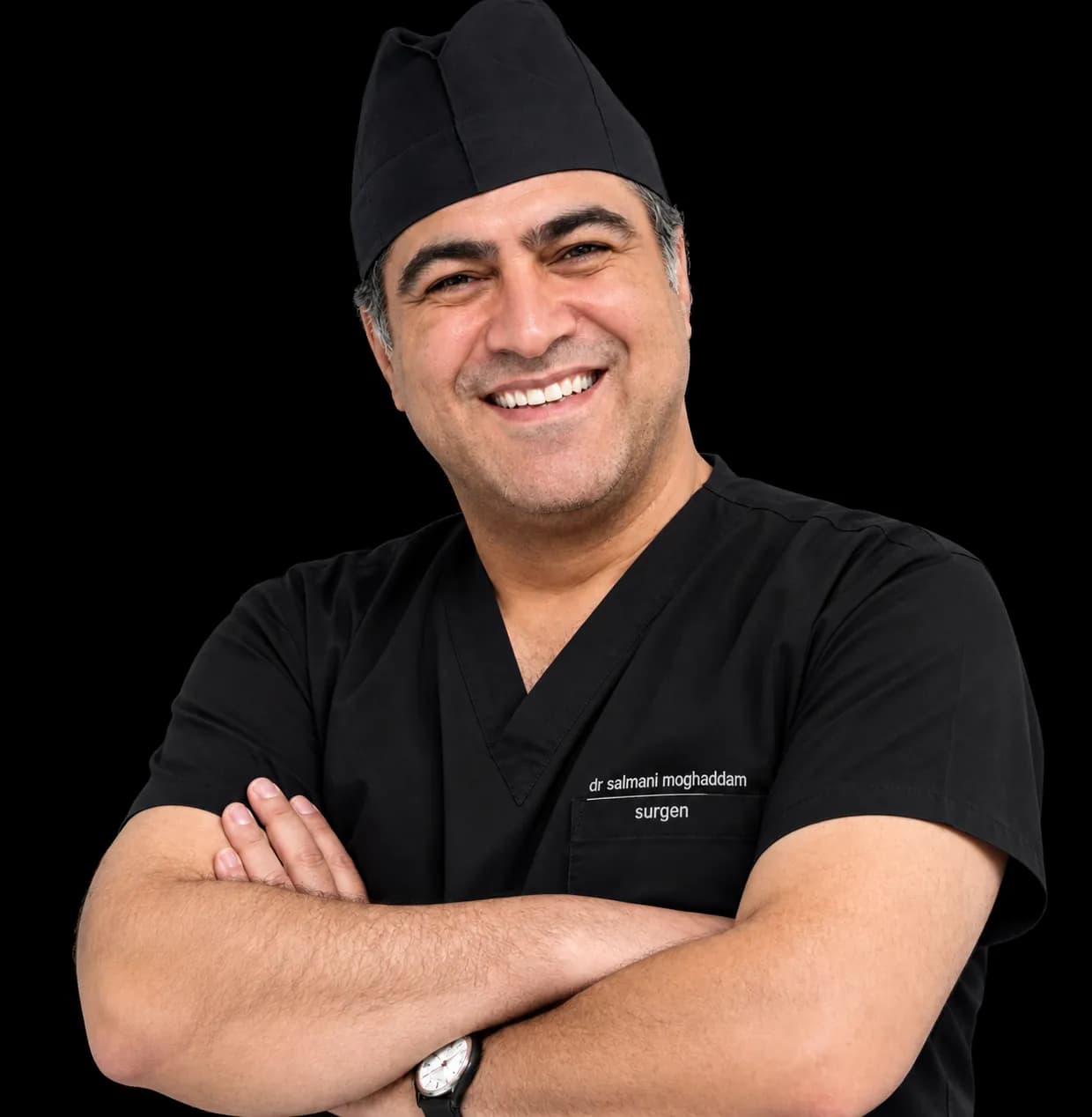
General Surgeon
Medical Council No.: 74530
Board-certified general surgeon focused on body contouring, abdominoplasty, VASER liposuction and aesthetic breast surgery.
- Board-certified general surgeon
- Member of the Iranian Medical Council
- Specialist in body contouring, VASER liposuction and aesthetic breast surgery
Medically reviewed by a physician
See the full profileQuestions about this procedure?
A consultation covers your own anatomy, what is realistically achievable, and what it involves.
Rhinoplasty (Nose Surgery)Comments
No comments yet. Be the first to write one.
Related articles
Best Nose Shape for a Square Face with a Wide Jaw
For a square face with a wide jaw, a nose with a fairly straight, moderate bridge and a mid-range, gently rotated tip usually creates the best harmony with the jaw's angles. An overly small or doll-like nose tends to look out of proportion.
Read moreBest Nose Shape for a Long, Thin Face
For a long, thin face, a nose with a fuller, shorter bridge, a natural-height radix, and moderate tip rotation breaks up vertical length and creates balance — usually better than a doll-like tip.
Read moreBest Nose Shape for a Round Face
For a round face, a nose with a narrow, elongated bridge, a slightly elevated radix, and a gentle upward tip creates the strongest visual balance, lengthening the face and narrowing its width.
Read more