
Breast Implants: A Complete Guide From Decision to Recovery

In short
Breast implant surgery places a silicone or saline implant under the muscle or breast tissue to add volume and shape. A sound decision covers material, shape, placement, realistic complications, and a long-term MRI monitoring plan.
What is breast implant surgery, and who is actually a good candidate?

Breast implant surgery places a silicone or saline implant under the chest muscle or under the breast tissue to increase breast volume or correct asymmetry. Per NCBI/StatPearls, it's one of the most frequently performed cosmetic procedures, typically sought after volume loss from pregnancy and breastfeeding, naturally smaller breast volume, or reconstruction after mastectomy.
The baseline requirement is being over 18 and past the body's growth phase. Beyond that age threshold, the real decision has several layers: implant material, shape and surface, placement, and a clear understanding of complications and the long-term monitoring plan. This guide walks through each of those layers in order — from the decision itself to what happens years after surgery — rather than repeating a generic "what is breast augmentation" overview.
Step one: when is breast implant surgery not the right choice?

Before choosing implant material or shape, it's worth confirming you're actually a good candidate at all. Per NCBI/StatPearls, most people have no contraindication, but surgery should be delayed or avoided in these situations.
- Active breast infection or active cancer: these need treatment and control before any cosmetic surgery.
- Pregnancy: the hormonal and volume changes of pregnancy would destabilize any surgical result.
- A history of autoimmune disease or current radiation therapy: these make wound healing and tissue response unpredictable.
- A known silicone sensitivity or uncontrolled underlying medical conditions.
- Psychological instability or unrealistic expectations about the outcome: a surgeon needs to check expectations against a realistic result before proceeding.
This list isn't diagnostic — the final decision always follows an in-person exam and a full medical history.
Choosing implant material: silicone or saline?

Both implant types share an outer silicone shell; the difference is what fills them. Saline implants go in empty and are filled with sterile saline solution during surgery; silicone implants arrive pre-filled with cohesive silicone gel. Per FDA approval, saline implants are cleared for patients 18 and older, while silicone gel implants are cleared for patients 22 and older.
The choice between them usually comes down to how much natural breast tissue you have. NCBI/StatPearls notes that patients with less soft tissue coverage typically get a more natural feel from silicone implants, since the gel is closer to natural breast tissue; in thinner patients, silicone implants also tend to show less rippling at the edges under the skin than saline.
| Feature | Saline implant | Silicone implant |
|---|---|---|
| Fill material | Sterile saline solution | Cohesive silicone gel |
| Minimum FDA-cleared age | 18 | 22 |
| Feel | Slightly firmer | Closer to natural tissue |
| Sign of rupture | Usually immediate and visible (deflation) | Often silent, with no symptoms |
| Imaging follow-up needed | Less critical | Periodic MRI or ultrasound |
Shape, surface and profile: round or teardrop, smooth or textured?
Shape and surface are chosen independently of material. Round implants are the most common shape and look the same whether you're standing or lying down; teardrop (anatomical) implants carry more volume in the lower pole for a more graduated look in certain anatomies, but rotation of a teardrop implant visibly distorts the breast's shape.
Surfaces are either smooth or textured. Per NCBI/StatPearls, texturing is used mainly to prevent rotation in shaped implants, and some studies found it lowers capsular contracture rates when the implant sits in a subglandular pocket — though that benefit disappears when it's placed submuscularly. A more consequential fact for an informed decision: the American Society of Plastic Surgeons (ASPS) notes that, to date, no confirmed case of BIA-ALCL (a rare implant-associated lymphoma, covered in detail below) has involved only a smooth implant — every known case has involved a textured implant. That makes surface choice part of the risk conversation with your surgeon, not just a cosmetic detail.
Implant placement: under the muscle or under the gland?

An implant sits either under the pectoralis major muscle (submuscular) or directly under the breast gland and over the muscle (subglandular). Per NCBI/StatPearls, neither position is universally "better" — the choice depends on the patient's anatomy, how much natural breast tissue is available, and surgeon preference, and should be settled together in consultation.
Incision location is a separate decision: the three common approaches are the inframammary fold, around the areola (periareolar), and through the armpit (transaxillary). Each gives the surgeon different visibility and leaves the scar in a different place, and the final choice is made at the exam based on your body.
What actually happens on surgery day?
Per NCBI/StatPearls, breast implant surgery is typically done under general anesthesia on an outpatient basis and takes 45 to 90 minutes; in select cases, local anesthesia with sedation is used instead. The surgeon creates a pocket at the chosen incision site and in the chosen plane, centers the implant behind the breast, then closes the incision with sutures and a dressing.
If a saline implant is used, the empty shell is placed first and then filled with sterile saline through a port; a silicone implant arrives pre-filled and is simply positioned. Most patients go home the same day or the following morning.
What does week-by-week recovery actually look like?

Per NCBI/StatPearls, returning to light daily activity is usually possible within about a week, but a full return to physical activity — including strenuous exercise — can take up to 6 weeks. Wearing a surgical bra and avoiding activities that move the breasts is recommended throughout this window.
| Timeframe | What typically happens |
|---|---|
| First 2–3 days | Swelling, mild bruising, pain manageable with medication |
| About 1 week | Return to light desk work and daily activity |
| Up to 6 weeks | Return to exercise and strenuous physical activity |
| Weeks to months | Implants gradually settle ("drop and fluff") into a softer, more natural shape |
These ranges are averages — body type, implant placement and individual healing speed can all shift this table.
What complications can breast implant surgery cause? Early and late

Per NCBI/StatPearls, the overall complication risk is low, but no surgery is risk-free. Complications fall into an early and a late group.
Early complications (days to the first few weeks)
- Infection, hematoma (bleeding) or seroma (fluid buildup) at the surgical site.
- Asymmetry or an unsatisfactory cosmetic result that may need revision.
- Changed nipple or skin sensation, which is temporary in most cases.
Late complications (months to years later)
- Implant malposition or displacement.
- Implant rupture or leak — with silicone implants, this is often silent and symptom-free.
- Capsular contracture: tightening of the scar tissue around the implant, graded on a scale of 1 to 4; severe cases need corrective surgery or implant removal. The exact cause is unclear, but many researchers link it to a low-grade subclinical infection and biofilm forming on the implant surface.
According to a survey cited in the same review, roughly 70–80% of patients reported being fully satisfied with their outcome — a figure that points to mostly positive experiences, not to an absence of risk.
Do breast implants last forever? When do they need replacing?

No. Per NCBI/StatPearls, no implant is a lifetime device, and it may eventually rupture or leak; many surgeons estimate an average lifespan of 15 to 20 years, though there's no uniform schedule for mandatory replacement — some surgeons recommend proactive replacement at 10 to 15 years, others wait until the implant itself becomes symptomatic.
What matters more for silicone implants is a monitoring plan that starts before any symptom appears. Per the American Society of Plastic Surgeons (ASPS), as of 2020 the FDA recommends the first MRI or ultrasound screening 5 to 6 years after silicone implant surgery, then every 2 to 3 years after that — even with no symptoms at all. The reason is straightforward: silicone implant rupture is often completely silent, and periodic imaging, not self-exam or how the breast feels, is the only reliable way to catch it.
BIA-ALCL and the longer-term risks that get less airtime
BIA-ALCL (breast implant-associated anaplastic large cell lymphoma) is a rare cancer of the immune system, not of breast tissue; per ASPS, it develops in the scar capsule that forms around the implant, and to date no confirmed case has involved only a smooth-surface implant — every known case has involved a textured implant. Reported incidence estimates range from about 1 in 3,817 to 1 in 30,000 patients with textured implants.
The encouraging part: per the same source, BIA-ALCL is usually curable when caught and treated early. Warning symptoms include unexplained sudden breast enlargement, pain, new asymmetry, a lump in the breast or armpit, a skin rash over the breast, or unusual hardening — any of these warrants prompt medical evaluation. Since 2021, the FDA has required every implant manufacturer to provide a Patient Decision Checklist listing known risks, which is meant to be reviewed and signed with your surgeon before surgery — meaning this conversation is a formal part of informed consent, not a footnote.
How do breast implants affect breastfeeding, mammograms and future pregnancy?
Breast implants usually don't block breastfeeding, since the implant sits behind the gland or behind the muscle rather than interfering with milk ducts; that said, the incision location can matter and is worth raising with your surgeon beforehand. Implants also don't prevent mammography, but the imaging center needs to know about them in advance so it can use the additional views and technique needed to properly image the tissue behind the implant.
For future pregnancy, the body's volume changes again during pregnancy and breastfeeding, and this can shift the breast's final shape slightly; that shift has nothing to do with implant safety, but it's why some surgeons prefer to time final shaping surgery after planned pregnancies are complete. Timing is worth raising in consultation alongside your family plans.
Combining breast implants with a breast lift or other procedures

Breast implants only add volume — they don't correct sagging. If volume loss is combined with noticeable ptosis, an implant alone won't give a natural result, and it's typically paired with a breast lift in the same session — a decision made only after an exam that grades the degree of sagging.
For patients who, after pregnancy or significant weight loss, want both a change in breast shape and an improved abdominal contour, Dr. Mehdi Salmani Moghaddam's background in abdominoplasty and liposuction alongside breast surgery makes a combined evaluation (a mommy makeover) possible — a genuinely relevant option for patients traveling for surgery who want to address more than one area in a single trip. Combining procedures in one anesthesia session shortens overall recovery time but also raises the operation's overall risk; the final call always rests on general health and an in-person exam, not the convenience of one surgical trip.
How natural does the result actually look?
This is the question most people actually have before deciding, and the fair answer is: the result depends on matching material, shape, size and placement to your own anatomy — not on a single "standard" look that applies to everyone. As covered above, those exact choices are what determine final shape, feel and how naturally the breast moves.
Because of that, seeing real results on real patients is a meaningful part of making an informed decision — something that, for patient privacy, can't be published openly on a website. To see real breast implant results, message the practice's Telegram channel now, and photos matching the size and shape you're considering can be shared with you privately.
Frequently Asked Questions
How is breast implant size (cc) chosen, and how does it relate to bra size?
Implant volume is measured in cubic centimeters (cc), not bra size — there's no fixed conversion between the two, since chest width, existing tissue and even bra brand all factor in. Sizing is worked out in consultation, usually with trial sizers, to match your anatomy and goals rather than a predetermined number.
How much pain is there after breast implant surgery, and how long does it last?
Pain in the first few days is usually manageable with prescribed medication and peaks in the first 48 to 72 hours. Per NCBI/StatPearls, a return to light activity is typically possible within about a week; milder discomfort can linger for a few weeks while gradually fading.
How much does breast implant surgery cost?
Cost depends on implant material and brand, placement, anesthesia type, and whether it's combined with a breast lift or other procedures. The practice's current pricing is listed on the services page; this article doesn't quote figures because prices change over time.
Can you sleep on your stomach or exercise after breast implant surgery?
In the first few weeks, sleeping on your back or side is usually recommended to avoid pressure on the surgical site; per NCBI/StatPearls, a return to your preferred sleep position and strenuous exercise is typically delayed up to 6 weeks. Your surgeon sets the exact timeline based on how your recovery is going.
How long do breast implants last?
No implant lasts forever; many surgeons estimate an average lifespan of 15 to 20 years, though there's no single mandatory replacement schedule. For silicone implants, the FDA recommends periodic MRI or ultrasound screening — starting 5 to 6 years after surgery, then every 2 to 3 years — specifically to catch a silent rupture early.
When should you talk to a doctor
If you're unhappy with your breast volume or shape, your weight has been stable for a few months, and you want a realistic assessment of your options, that's a reasonable time for an in-person consultation. If you already have implants and notice fever, redness, sudden swelling or a new lump, those symptoms need prompt medical evaluation. This article is educational and doesn't replace an in-person exam and full medical history — only a surgeon, after examining you, can decide on candidacy, material, shape and placement.
Sources
This article is educational and does not replace an in-person examination or consultation. Discuss any surgical decision with your own physician.
About the author
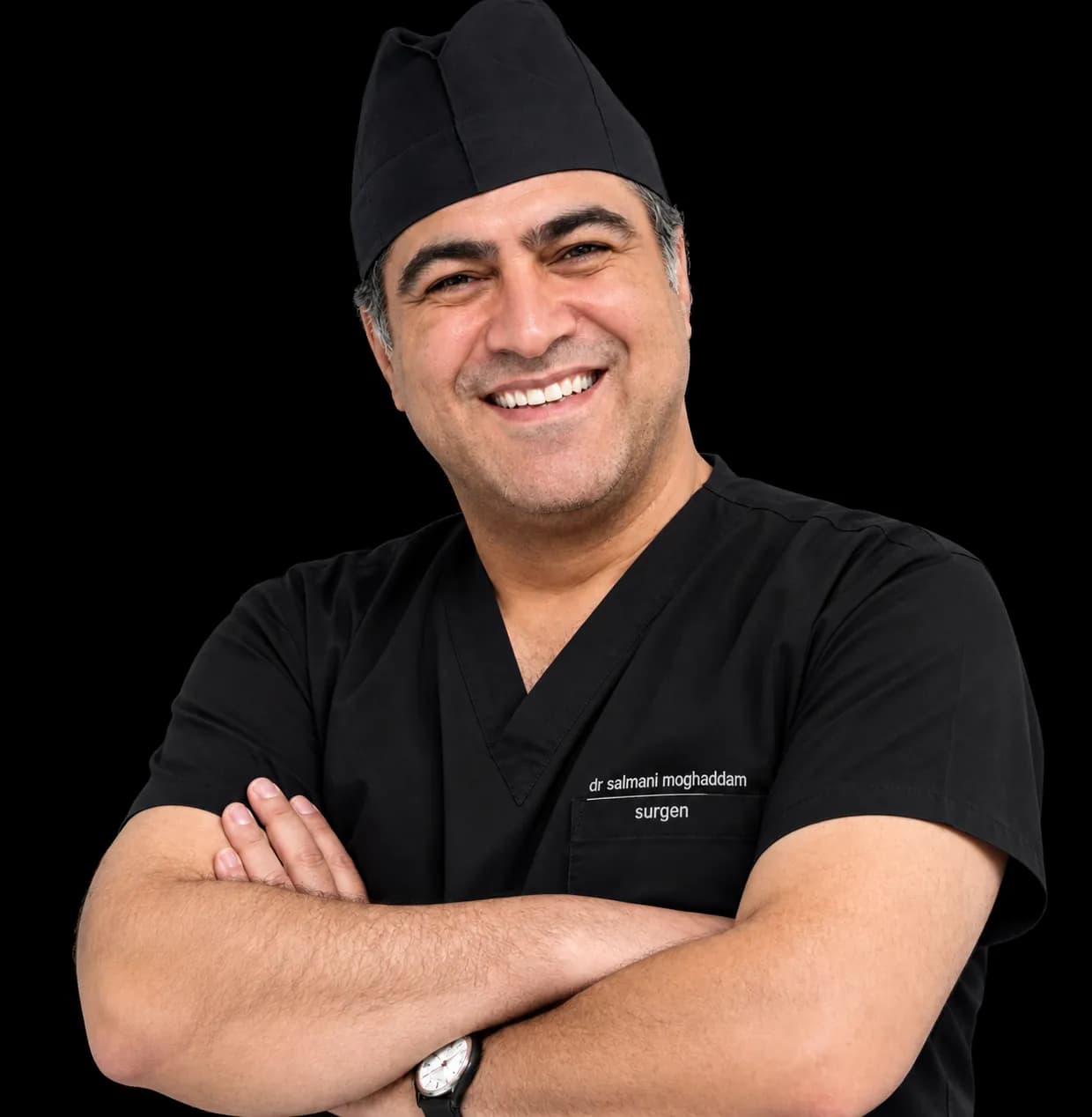
General Surgeon
Medical Council No.: 74530
Board-certified general surgeon focused on body contouring, abdominoplasty, VASER liposuction and aesthetic breast surgery.
- Board-certified general surgeon
- Member of the Iranian Medical Council
- Specialist in body contouring, VASER liposuction and aesthetic breast surgery
Medically reviewed by a physician
See the full profileQuestions about this procedure?
A consultation covers your own anatomy, what is realistically achievable, and what it involves.
Breast ImplantsComments
No comments yet. Be the first to write one.