
Best Nose Shape for a Square Face with a Wide Jaw

In short
For a square face with a wide jaw, a nose with a fairly straight, moderate bridge and a mid-range, gently rotated tip usually creates the best harmony with the jaw's angles. An overly small or doll-like nose tends to look out of proportion.
What Is the Best Nose Shape for a Square Face with a Wide Jaw?
A nose with a fairly straight bridge of moderate width, a radix at natural height, and a tip that is neither sharply pointed nor fully rounded — with gentle upward rotation — usually creates the most harmony with a square face and wide jaw, because it balances the jaw's width instead of contrasting with it. Still, a "square face" and a "wide jaw" are not always the same thing, and each pulls the decision in a different direction. This article is educational and does not replace an in-person consultation.
Below, you'll find the real difference between jaw angularity and jaw width, which nasal features create this balance, which styles are recommended or not, whether a rounded or pointed tip works better, how the choice differs between men and women, and when rhinoplasty is combined with another procedure.
A Square Face and a Wide Jaw Are Not the Same Thing

A square face comes down to jaw angularity — the corner of the jaw reads as a fairly sharp, defined angle rather than a soft curve. A wide jaw is a separate issue: the horizontal distance between the two jaw corners (bigonial width) relative to the width of the cheekbones and forehead. The two often appear together, but either can be more pronounced without the other.
- Square face: The jawline, cheeks, and forehead show fairly defined corners with little curve — a matter of bone angle.
- Wide jaw: The horizontal span between the two jaw corners is wider relative to the rest of the face — a matter of bone width, not necessarily angle.
- Why the difference matters: A square face can occur with a relatively narrow jaw, and a wide jaw can occur with softer corners. When the two appear together — the most common case this article covers — the nose needs to work with both the sharpness of the facial angles and the width of the jaw.
Which Nasal Features Balance a Square Face with a Wide Jaw?
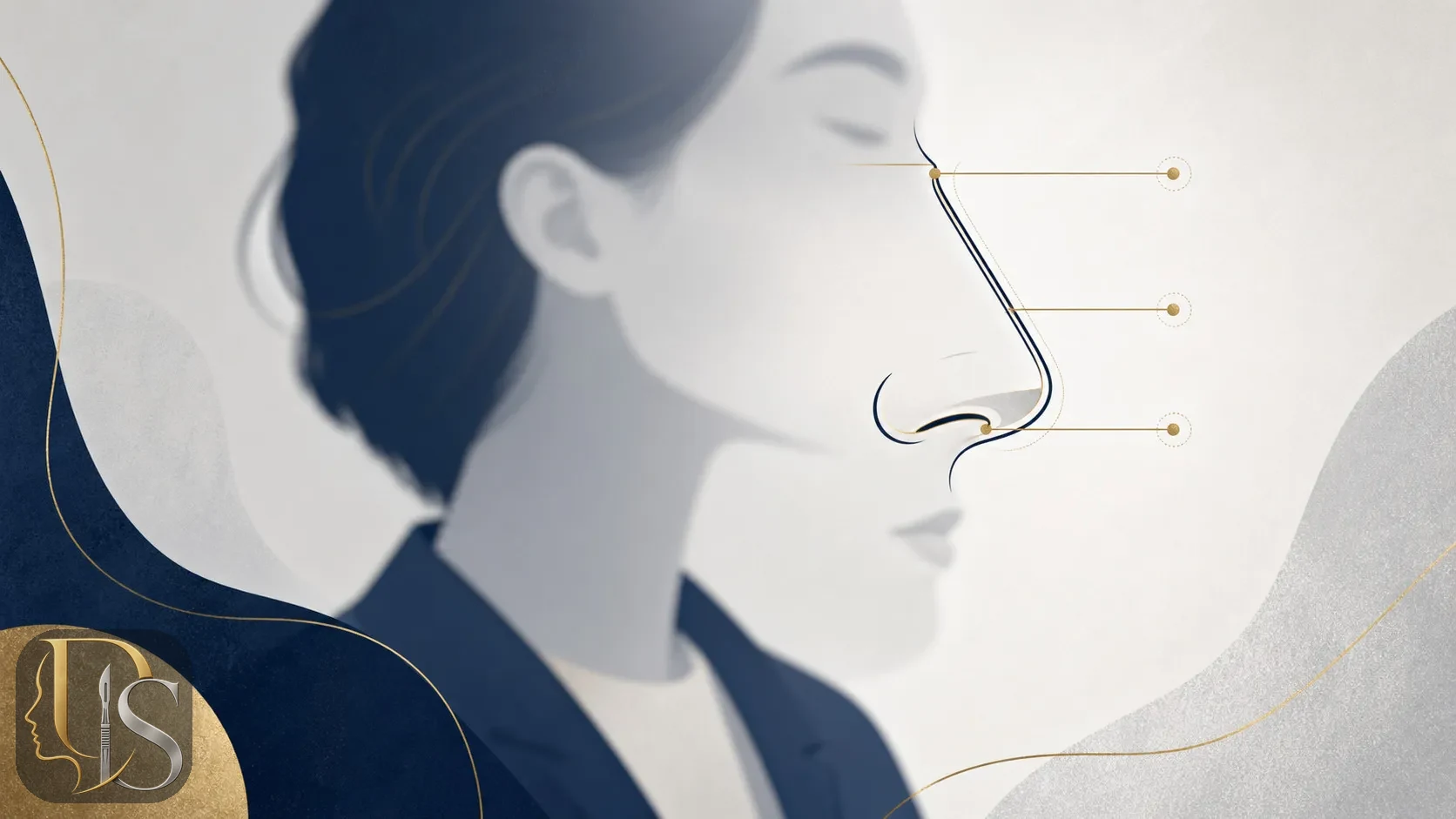
The nose's three regions — radix, bridge, and tip — play a different role here than on a long or round face: the goal is not to narrow the face or add length, but to harmonize the nose's width with the jaw's width without emphasizing the face's sharp angles. Changing one region without the other two can undo that balance.
Radix Height
A radix at natural height — not set too low, which can visually widen the upper face, and not too high — gives the rest of the nose a balanced base. Too low a radix, next to a wide jaw, can make the face look wider than it is.
Nasal Bridge
A bridge with a fairly straight line and moderate width — not pinched and narrow like some fantasy styles, and not overly broad — harmonizes better with the relatively straight angles of a square face. An overly narrow bridge creates a size contrast next to a wide jaw that draws attention to the width rather than balancing it.
Tip and Overall Shape
A tip that is neither sharply pointed nor fully rounded, with gentle upward rotation, tends to suit a square jawline best. An overly sharp tip echoes the face's angularity, while a very small, rounded tip creates a size contrast against a wide jaw.
| Nasal feature | Desired effect on a square face with a wide jaw | Undesired effect |
|---|---|---|
| Radix | Natural height gives a balanced base | Too low, makes a wide jaw look wider |
| Bridge | Fairly straight, moderate width | Too narrow, creates contrast with the jaw |
| Tip | Mid-range shape (neither sharp nor fully round), gentle rotation | Too sharp or too small and round |
| Nostrils | Proportionate to facial width | Overly pinched, contrasts with a wide jaw |
Which Style — Natural, Semi-Fantasy, or Fantasy — Suits a Wide Jaw Best?

A natural or gently semi-fantasy style — keeping moderate bridge width and a mid-range tip shape — is usually the safer choice for most square faces with a wide jaw, since it avoids the size contrast a fully fantasy, very narrow nose creates.
A more common semi-fantasy style (not overly narrow) can work when jaw angularity is milder and jaw width is moderate. A fully fantasy or doll-like nose is usually not recommended for a wide jaw, for reasons covered next. For an overview of common nose shapes and their anatomic features, see this guide to nose shape types.
Why Is a Very Small or Doll-Like Nose Usually Not Recommended for a Wide Jaw?
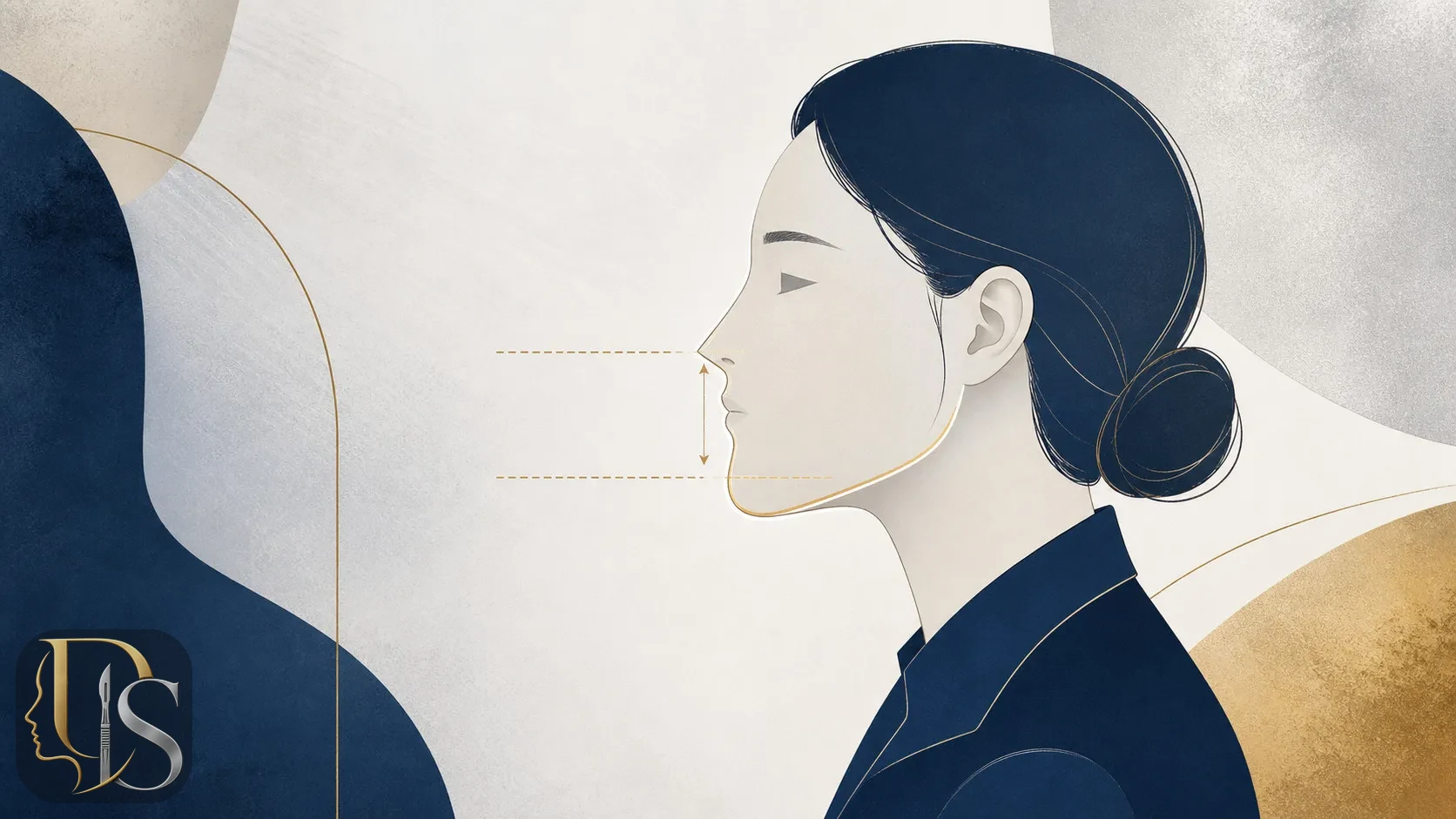
A doll-like or fantasy nose narrows the bridge sharply and lifts the tip into a very small, upturned shape. On a face with a wide jaw, that smallness doesn't create balance — it makes the size contrast between a tiny nose and a wide jaw more obvious, and can make the jawline look even wider by comparison.
This isn't an absolute rule — on faces where jaw width is limited and the jaw angle is soft, some semi-fantasy features may still work well. Telling the difference requires an in-person exam that actually measures jaw width against the cheeks and forehead, not a look at a single reference photo.
Is a Rounded or Pointed Tip Better for a Wide Jaw?
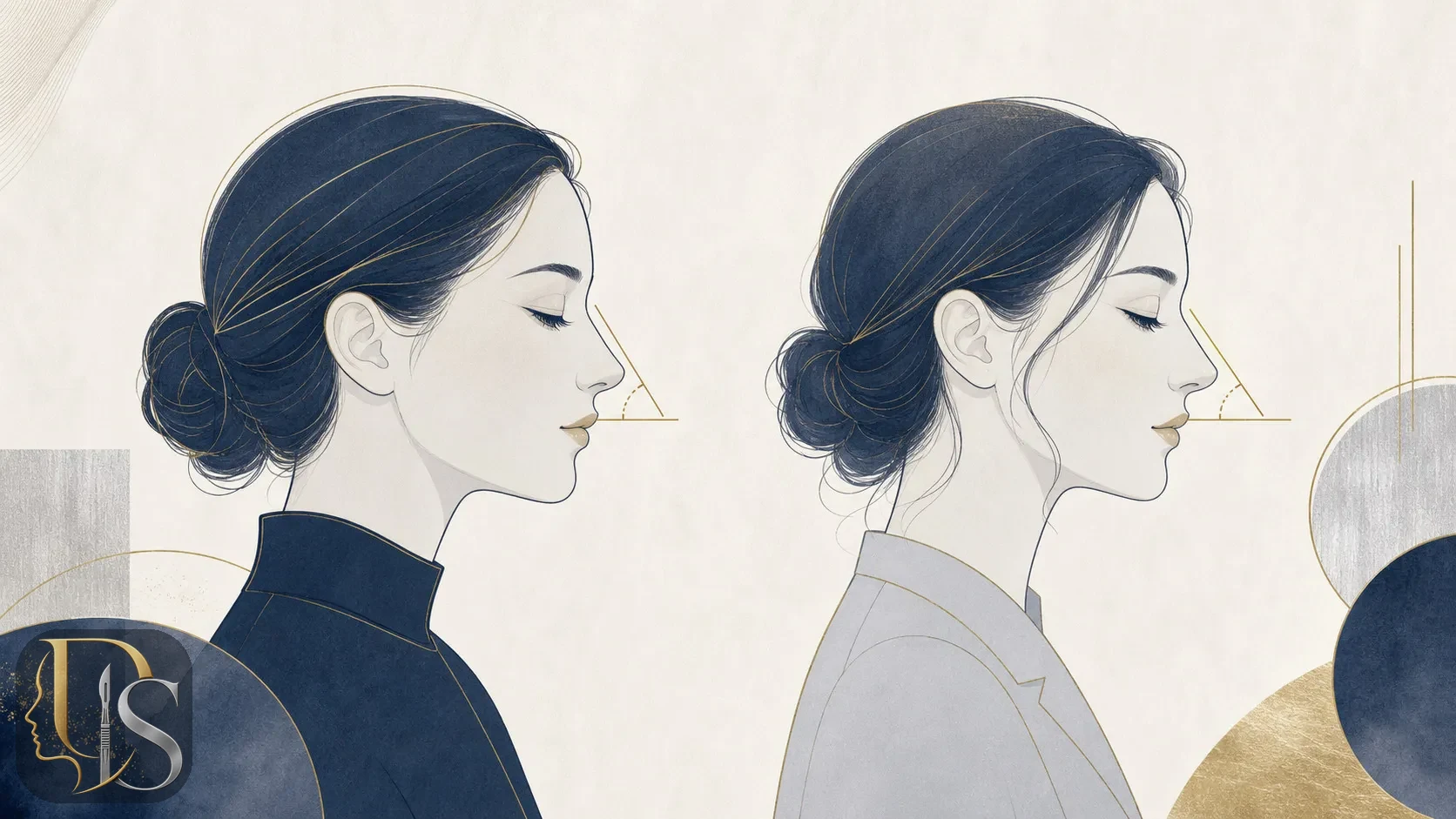
Neither extreme — a mid-range tip shape, slightly softer than a classic pointed tip but firmer than a fully rounded one, usually works best with a wide jaw. A sharply pointed tip echoes the face's angularity, while a fully rounded tip looks small and out of proportion next to a wide jaw.
The exact point between these two extremes depends on actual jaw width, the skin thickness at the nasal tip, and cartilage strength, and is assessed during an in-person exam — this is a general guide, not a fixed rule for every patient.
Does the Ideal Nose Shape for a Wide Jaw Differ Between Men and Women?

The general principles — a fairly straight bridge, moderate width, a mid-range tip — apply to both sexes, but the range for each feature differs. In a feminine nose for a wide jaw, a softer tip and slightly more noticeable rotation are usually preferred; in a masculine nose, a straighter bridge and less tip rotation are chosen to keep the profile looking more defined.
The end goal — harmonizing the nose with jaw width without emphasizing facial angles — is the same for both; only the degree of change differs. These ranges are general guidance, adjusted during an in-person exam that looks at the whole face.
When Is Rhinoplasty Combined with Another Procedure for a Square Face with a Wide Jaw?

When part of the jaw's apparent width comes from fat buildup under the chin (submental fullness) rather than bone alone, rhinoplasty on its own won't address that part of facial balance. In such cases, some patients combine VASER liposuction of the chin/submental area with rhinoplasty in the same recovery period and anesthesia plan.
A background in general surgery alongside cosmetic procedures makes this kind of coordination easier, particularly for patients traveling from another city or country who prefer to make several changes in one trip. It's worth being clear that changing the width of the jawbone itself is a separate surgery not performed by Dr. Salmani; what rhinoplasty and submental liposuction can address is the nose's harmony with the jaw and chin fat, not the bone width of the jaw.
When Should You Consult a Doctor?
If you're considering rhinoplasty to bring your nose into better harmony with a square face and wide jaw, an in-person exam to measure actual jaw width, jaw angle, and nasal tip skin thickness is necessary — not just a look at your face in a mirror or photo. Full details on the procedure are on the rhinoplasty page, with current pricing in the services list. To see real results on similar faces, the before-and-after gallery is also a useful reference. For a contrasting set of principles, see this article on the best nose shape for a long, thin face.
For a comparison with two face shapes that have a narrow chin, see the article on heart and diamond faces.
Frequently Asked Questions
Which nose shape works best overall for a square face with a wide jaw?
A nose with a fairly straight, moderate-width bridge, a natural-height radix, and a mid-range tip shape with gentle rotation, since it balances the jaw's width instead of creating a size contrast with it.
What's the difference between jaw angularity and jaw width in choosing a nose shape?
Jaw angularity refers to how sharp or soft the jaw's corner looks and creates a square appearance; jaw width refers to the horizontal span between the two jaw corners relative to the rest of the face. They often occur together but can be independent, and each affects the nose-shape decision differently.
Is a doll-like nose suitable for a wide jaw?
Usually not; a very small nose with an upturned tip makes the size contrast between the nose and a wide jaw more obvious, except on jaws with limited width and a soft angle, which is assessed during an in-person exam.
Rounded or pointed — which nasal tip suits a wide jaw?
Neither extreme works best; a mid-range tip shape usually creates the most harmony with a wide jaw, since it avoids echoing the face's angularity while still looking proportionate next to the jaw's width.
How does the ideal nose shape for a wide jaw differ between men and women?
The general principle is the same, but a feminine nose usually has a softer tip with slightly more rotation, while a masculine nose keeps a straighter bridge and less tip rotation to preserve a more defined profile.
Can submental liposuction be combined with rhinoplasty?
Yes — when part of the jaw's apparent width comes from fat under the chin, some patients combine the two procedures in one anesthesia session; however, changing the width of the jawbone itself is a separate surgery not performed by Dr. Salmani.
Sources
This article is educational and does not replace an in-person examination or consultation. Discuss any surgical decision with your own physician.
About the author

General Surgeon
Medical Council No.: 74530 · Verify in the Medical Council register
Specialist in general surgery focused on rhinoplasty, body contouring, abdominoplasty, VASER liposuction and aesthetic breast surgery.
- Specialist in general surgery
- Member of the Iranian Medical Council
- Specialist in body contouring, VASER liposuction and aesthetic breast surgery
Medically reviewed by a physician
See the full profileQuestions about this procedure?
A consultation covers your own anatomy, what is realistically achievable, and what it involves.
Rhinoplasty (Nose Surgery)Comments
No comments yet. Be the first to write one.
Related articles
Best Nose Shape for a Long, Thin Face
For a long, thin face, a nose with a fuller, shorter bridge, a natural-height radix, and moderate tip rotation breaks up vertical length and creates balance — usually better than a doll-like tip.
Read moreBest Nose Shape for a Round Face
For a round face, a nose with a narrow, elongated bridge, a slightly elevated radix, and a gentle upward tip creates the strongest visual balance, lengthening the face and narrowing its width.
Read moreNose Shapes With Photos: Roman, Aquiline, Button, Fleshy & More
A visual and anatomical guide to six common nose shapes — short, long, fleshy, Roman, aquiline, and button — and what each one means for planning a rhinoplasty.
Read more