
Abdominoplasty After Childbirth: How Many Months to Wait

In short
The right timing for abdominoplasty after childbirth is usually 6 to 12 months, once weight has been stable for at least three months, breastfeeding has ended, and no future pregnancy is planned. All four conditions must hold at once.
How Many Months After Childbirth Is Abdominoplasty Appropriate?
For most patients, the 6-to-12-month window after childbirth — whether vaginal or cesarean — is the appropriate time for abdominoplasty, provided weight has been stable for at least three consecutive months, breastfeeding has ended or is close to ending, and there is no plan for another pregnancy in the near future. This window is an average, not a fixed rule for everyone; the final decision is always made after an in-person exam. This article is educational and does not replace medical consultation.
Why Isn't There a Single Fixed Number, but Several Conditions at Once?
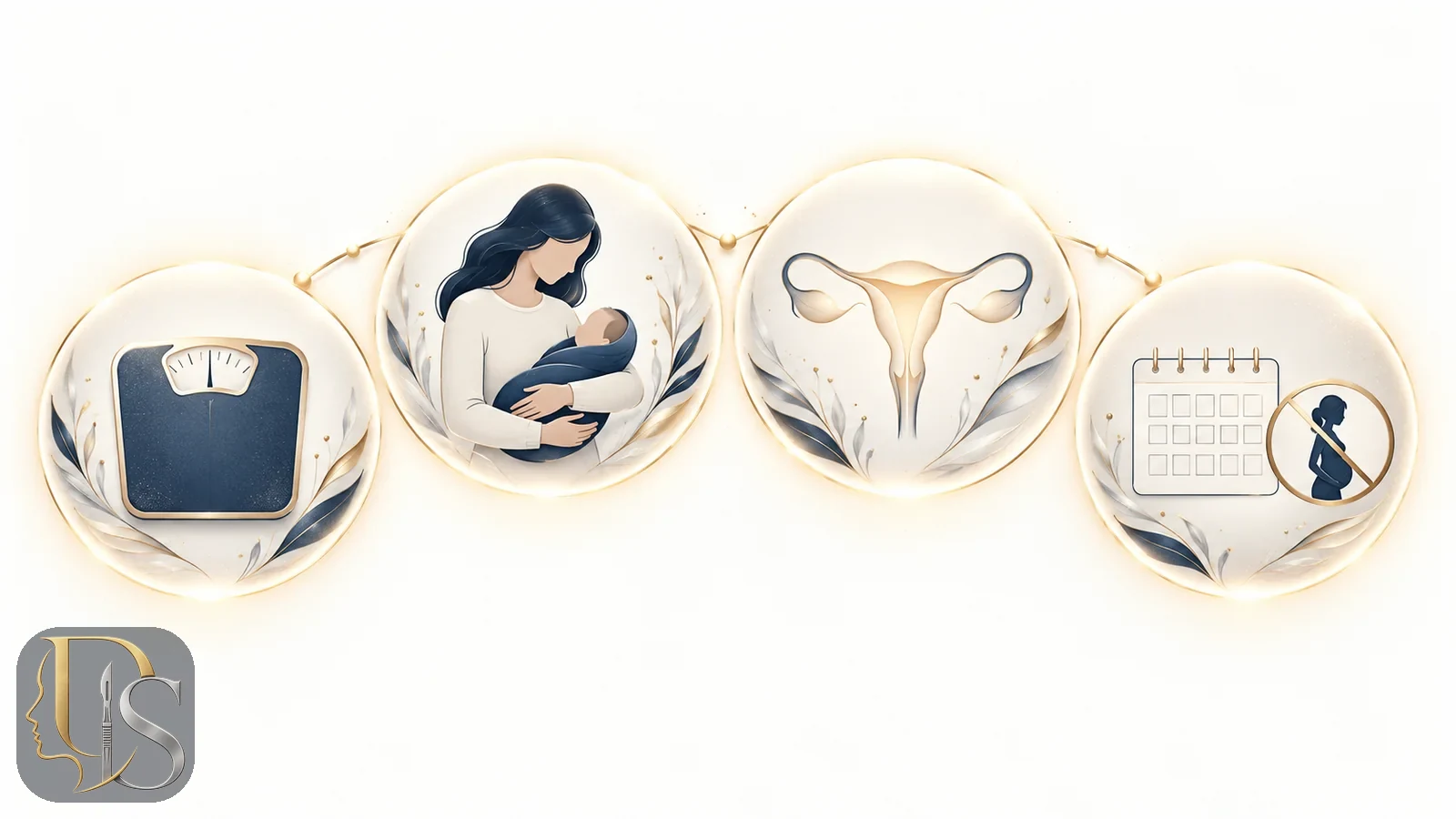
Every patient's body returns to baseline at a different pace, which is why timing abdominoplasty after childbirth should not be reduced to one fixed number. Four independent conditions must hold at the same time: stable weight, breastfeeding ending or nearly ending, internal recovery of the uterus and pelvic tissue, and no plan for another pregnancy. If even one of these four is not met, the surgeon typically postpones the procedure — not because abdominoplasty is impossible, but because the result would not hold steady under those conditions.
Stable Weight: The Most Practical Criterion
Stable weight means weight fluctuation has stayed under about 2 to 3 kilograms for at least three consecutive months, not simply that weight loss has slowed down. Many mothers are still losing weight gradually as late as month ten to twelve postpartum; performing abdominoplasty during that window means the remaining skin loosens again as weight continues to drop, undoing part of the result.
Breastfeeding Ending or Nearing Its End
Active breastfeeding creates two problems for abdominoplasty: fluctuating breast volume and shape that affects navel positioning and surgical markings, and the need for general anesthesia, which in some cases requires a temporary pause in breastfeeding. According to plastic surgery literature, most surgeons recommend that at least a few weeks to a few months pass since breastfeeding fully stops, so hormone levels and breast tissue also reach relative stability.
Internal Recovery of the Uterus and Pelvic Tissue (Involution)
The uterus and supportive pelvic tissue gradually return to their pre-pregnancy size through a process called involution; according to the American College of Obstetricians and Gynecologists (ACOG), most of this recovery happens within the first 6 weeks, but full remodeling of the connective tissue and abdominal fascia usually takes several more months. Operating earlier than that means operating on an abdominal wall that is still changing.
No Plans for Pregnancy in the Near Future
A pregnancy after abdominoplasty re-stretches skin and muscle that has just been tightened and sutured, and in many cases undoes a significant part of the result; sometimes even the fascia plication (muscle suturing) reopens. For this reason, the procedure is typically recommended only for patients who have made a firm decision against another pregnancy, at least for the next several years.
Vaginal Delivery vs. Cesarean: Does Timing Differ?

The core criteria — stable weight, end of breastfeeding, uterine recovery, and pregnancy plans — are identical across both delivery types, since all of them trace back to the pregnancy itself, not the delivery method. The real difference comes down to one point: whether or not there is a fresh surgical incision on the very area abdominoplasty is about to work on.
When the Cesarean Incision Hasn't Fully Healed
A cesarean incision cuts through skin down to the abdominal fascia — exactly the layers that abdominoplasty reopens and repositions. According to ASPS, operating on tissue that healed only a few months earlier raises the risk of wound reopening, reduced blood supply to the skin flap, and irregular scarring. For this reason, cesarean patients typically need one more confirmation beyond the four criteria above: that the incision has healed fully and without ongoing inflammation.
Timeline Table: From Childbirth to Abdominoplasty Readiness

The table below maps approximate postpartum windows against readiness for abdominoplasty; these ranges are averages and are always adjusted through an individual exam.
| Time Since Childbirth | Weight and Tissue Status | Readiness for Abdominoplasty |
|---|---|---|
| 0 to 6 weeks | Uterine involution in progress, early wound healing | Not suitable |
| 6 weeks to 6 months | Weight loss ongoing, breastfeeding usually active | Usually premature |
| 6 to 12 months | Weight stable for most patients, breastfeeding ended | Suitable for most patients |
| Over 12 months | Fully stabilized, even after significant weight loss | Suitable for all groups |
Why Do Some Sources Recommend 12 to 24 Months?

The gap between the 6-to-12-month recommendation and the 12-to-24-month recommendation seen across different sources usually comes from differences in patient circumstances, not disagreement among doctors. Three factors extend the window: weight gain during pregnancy beyond the typical range, multiple pregnancies spaced closely together, and breastfeeding that continues beyond a year. In these groups, genuinely reaching the three-month weight-stability criterion naturally takes longer, which makes the 12-to-24-month window more realistic — a larger number isn't a stricter rule, it simply reflects different circumstances.
What About Combining Abdominoplasty With a Cesarean?

Some clinics advertise combining abdominoplasty with a cesarean in a single surgical session, but this article and most specialized plastic surgery sources recommend separate timing (6 to 12 months later) instead. The main reason is that at the moment of a cesarean, the abdominal wall is still swollen and actively changing — meaning any incision and suturing done for the final shape of the abdomen is performed on a moving target, and combining two major procedures also raises surgical risk. A full breakdown of these risks, and why most surgeons oppose the combination, is covered in Abdominoplasty Combined With a Cesarean.
What Signs Mean Your Body Isn't Ready Yet?
- Weight is still changing — even a few hundred grams a month means you haven't reached true stability yet.
- Breastfeeding is still active, or fewer than a few weeks have passed since it fully stopped.
- Postpartum fatigue and anemia are still noticeable — recovering from major surgery requires adequate energy reserves and nutrition.
- The decision about another pregnancy isn't final yet.
If any of these apply, it makes more sense to push the surgery date back rather than proceed despite these signs.
Frequently Asked Questions
How soon after abdominoplasty can you get pregnant?
Doctors typically recommend waiting at least 12 to 18 months after abdominoplasty so the scar tissue and fascia plication fully stabilize; getting pregnant sooner can undo part of the surgical result.
Is abdominoplasty combined with a cesarean possible?
Technically, some centers perform it, but most surgeons avoid it due to increased risk of bleeding, infection, and an unpredictable result on tissue that is still swollen, preferring to perform abdominoplasty separately a few months later.
Can you get pregnant after body contouring surgery?
Medically, yes, but it is recommended to wait until the surgical result has stabilized before planning another pregnancy; otherwise, the renewed stretching of skin and muscle undoes part of the result.
If I breastfed for a long time, how much longer should I wait?
It's generally recommended to wait at least a few weeks to a few months after breastfeeding fully stops so breast volume and shape reach relative stability; with extended breastfeeding, this pushes the overall wait beyond the typical 6-to-12-month average.
Does losing weight quickly after childbirth move up the surgery date?
Not necessarily. What matters is reaching weight stability, not the speed of weight loss; even with rapid weight loss, until weight has held steady for at least three consecutive months, the tissue is still a moving target for surgery.
When to See a Doctor

Even if you think you haven't reached the 6-month window yet, an early consultation with a general surgery specialist helps set a realistic timeline based on your weight, breastfeeding status, and individual circumstances; for loose skin or diastasis that might not need surgery at all, the difference between what exercise can and cannot fix is explained in Belly Sagging After a C-Section. Full procedure details are on the Abdominoplasty page, and current pricing is listed on the services page.
Sources
This article is educational and does not replace an in-person examination or consultation. Discuss any surgical decision with your own physician.
About the author
General Surgeon
Medical Council No.: 74530
Board-certified general surgeon focused on body contouring, abdominoplasty, VASER liposuction and aesthetic breast surgery.
- Board-certified general surgeon
- Member of the Iranian Medical Council
- Specialist in body contouring, VASER liposuction and aesthetic breast surgery
Medically reviewed by a physician
See the full profileQuestions about this procedure?
A consultation covers your own anatomy, what is realistically achievable, and what it involves.
Abdominoplasty (Tummy Tuck)Comments
No comments yet. Be the first to write one.
Related articles
Abdominoplasty With a Cesarean: Why Most Surgeons Say No
Combining abdominoplasty with a cesarean is technically done at some centers, but most surgeons avoid it: the abdominal wall is still swollen and changing, and combining two major surgeries raises bleeding, infection, and clotting risk.
Read morePost-C-Section Belly Sag: What Exercise Can't Fix
Post-cesarean belly sagging comes from three separate causes: weak muscle tone, diastasis recti, and loose skin. Exercise restores tone and mild diastasis, but it cannot tighten overstretched skin or close a wide muscle gap.
Read moreAbdominoplasty After Gastric Sleeve: Timing & Readiness
Abdominoplasty after gastric sleeve surgery is typically performed 12 to 18 months post-op, once weight has held steady. Operating earlier means shaping a body still changing, raising the risk of wound-healing problems and returning skin laxity.
Read more